Showing posts with label tutorial. Show all posts

Tuesday, January 16, 2007

Samosa Tutorial

Sorry for the long delay, but as promised, here's a new tutorial. I'll try posting about the chutney soon. I think I may try a more macrobiotic-friendly version of samosas soon, but until then, here's a vegan version.

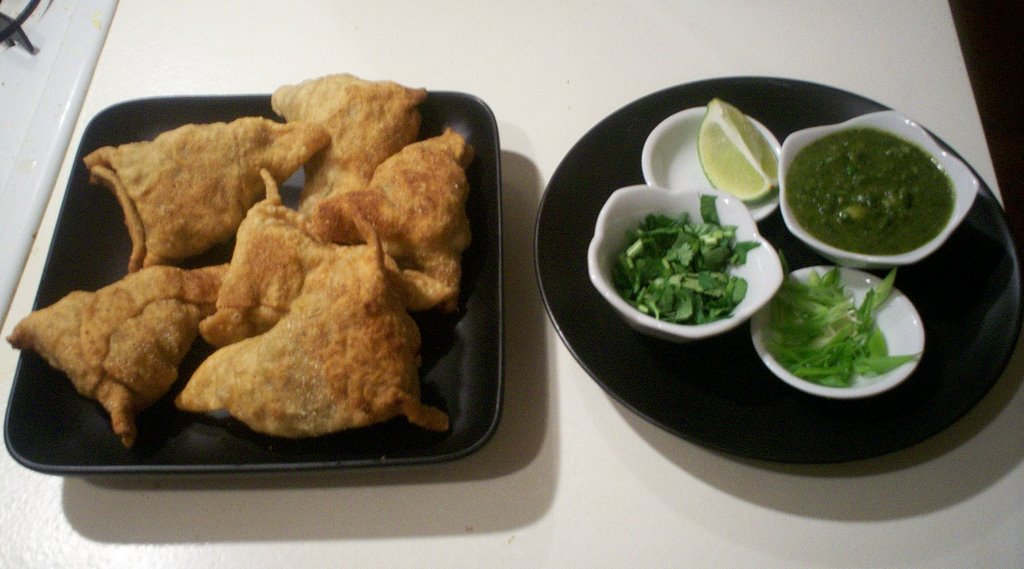
Samosas with Pomegranate Cilantro Chutney and condiments
A little backround on this tutorial: I had a hankering for samosas one evening when I happened to be feeling experimental. I decided that learning how to make them would serve me better and be much more useful than simply going out to find some, either frozen or take-out (who knows what kind of preservatives and additives would be in them?). By sheer luck, I happened to have three small potatoes leftover from the Thanksgiving mashed potatoes I made--I don't normally have potatoes in my home--but I did not have any peas, and to me, those ingredients are the basis for samosas. A quick call to JD ensured that he had some, which he'd bring over before he came for dinner. A little online research and some calculations gave me a basic idea of what I'd be doing, but I still wasn't sure how to roll the dough, fill the dough, or achieve the proper shape. I adjusted the ingredients of the dough a bit, since most recipes called for 2 cups of flour, which I knew would make way too much, and tried following the only set of directions I could find. The directions seemed to skip a few steps, and they didn't roll the dough into large enough circles, so I decided that the next time I made samosas-because there would definitely be a next time-I would take pictures and post a tutorial. After a bit of practice, they really are quite simple.

Samosas
Christina Terriquez

For crust:

1 cup organic white wheat flour
2 teaspoons organic safflower oil
1/4 teaspoon unrefined sea salt
1/3--3/4 cups water

1-3 cups of organic safflower oil, rice bran oil, or sunflower oil for frying

Filling:
1 teaspoon organic olive oil
1 tablespoon (or to taste) curry powder or a mixture of your favorite Indian spices such as:
coriander, tumeric, ground clove, ginger powder, cumin, chili powder, etc.
1/4 cup organic onion, diced (optional)
1 inch fresh ginger, peeled and minced (optional)
1--2 cloves organic garlic, minced (optional)
3 medium organic potatoes, boiled until soft and slightly mashed
1/2--1 cup organic frozen peas, thawed
unrefined sea salt
1/4--1/2 cup organic toasted slivered almonds (optional)
1/4--1/2 cup organic currants, raisins or sultanas (optional)

To prepare dough:

Shift flour and salt into a medium sized bowl. Add oil and mix until texture resembles a fine sand. Add 1/3 cup water and mix until flour comes together as a ball. More water may be needed. I usually use 1/2 cup. Knead dough for about 5 minutes, until dough is smooth and soft. Set aside and let dough rest for about 15 minutes.

To prepare filling:

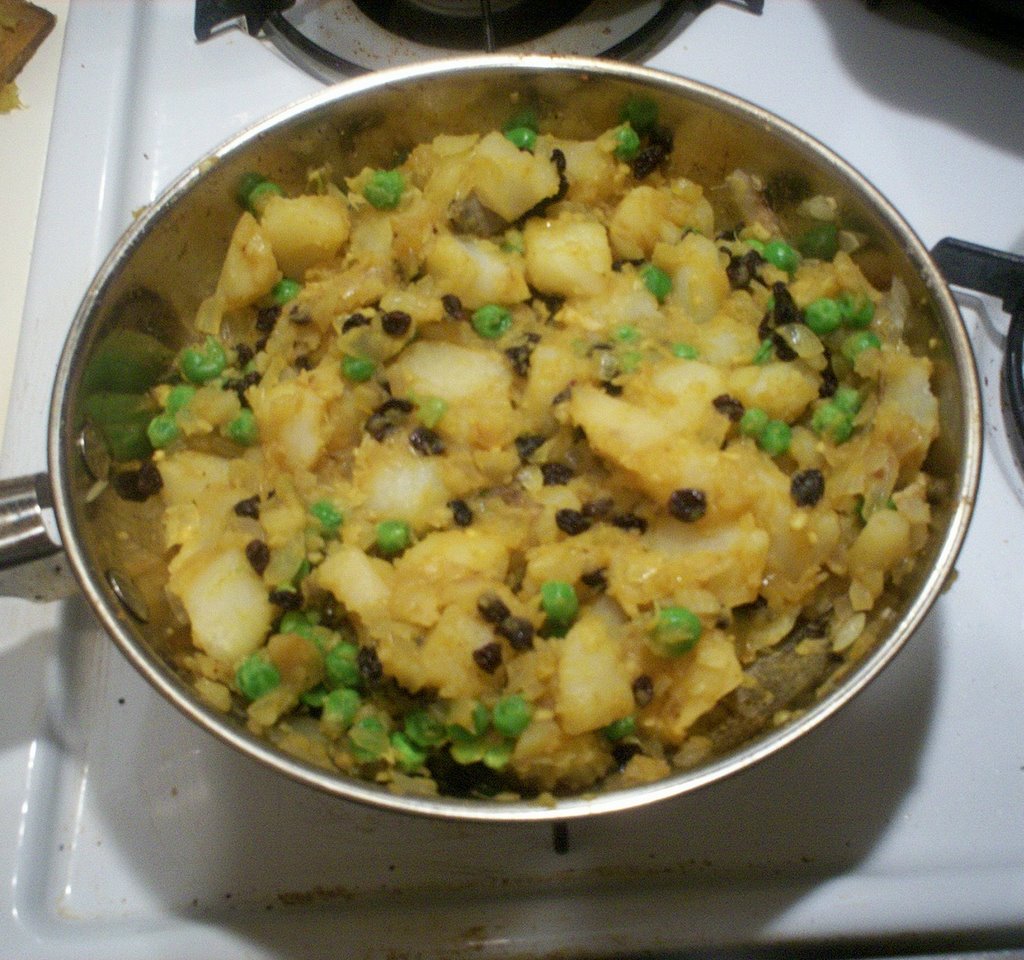
Heat oil in a stainless steel or cast iron skillet (oil should never smoke). Add dried spices and sauté over medium heat for 45 seconds to two minutes, until spices turn slightly darker and become fragrant. Add onion, garlic, and ginger and sauté until onion becomes translucent. Add potatoes and stir well. When all spices are evenly incorporated throughout the potatoes, add the peas, almonds and dried fruit, if using it. Remove from heat and set aside.


Prepared samosa filling with almonds and currants
To roll out dough and fill samosas:

Knead the dough for about two minutes.

Set up your workspace with an area (countertop or cutting board) large enough to roll the dough out, a small cup of water (1/2 cup) for dipping your fingers, a small amount of flour (less than 1/2 cup) for dusting your board, a bowl with the prepare filling and a small spoon, and two platters, plates or cookie sheets, one lined with parchment paper or a covered with a floursack towel and the other lined with paper towels.

Lightly flour your rolling area. Use just enough flour so that your dough will not stick, but not so much that thedough is completely caked in flour, either. Cut off a golf-ball-sized piece of dough, and roll it out into a large circle, approximately 6-8 inches in diameter. Cut the circle in half.
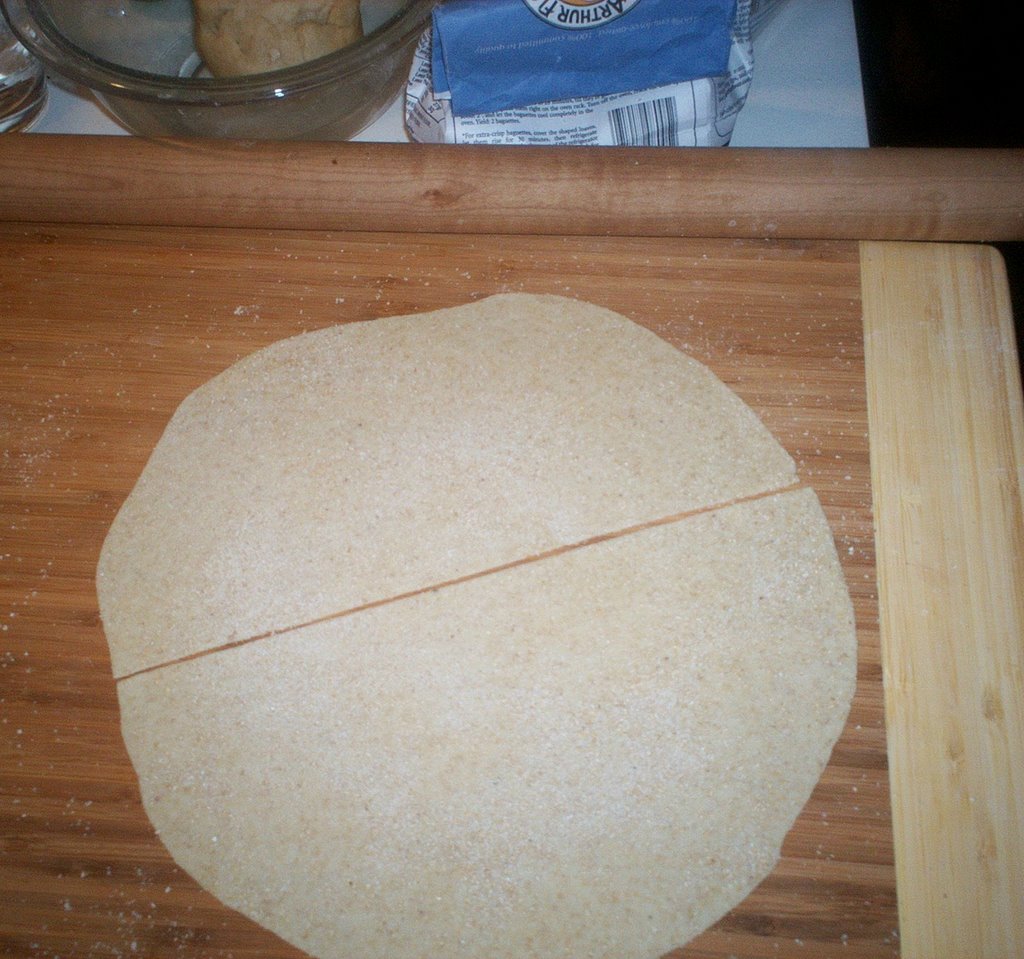
Fold one half circle in half.
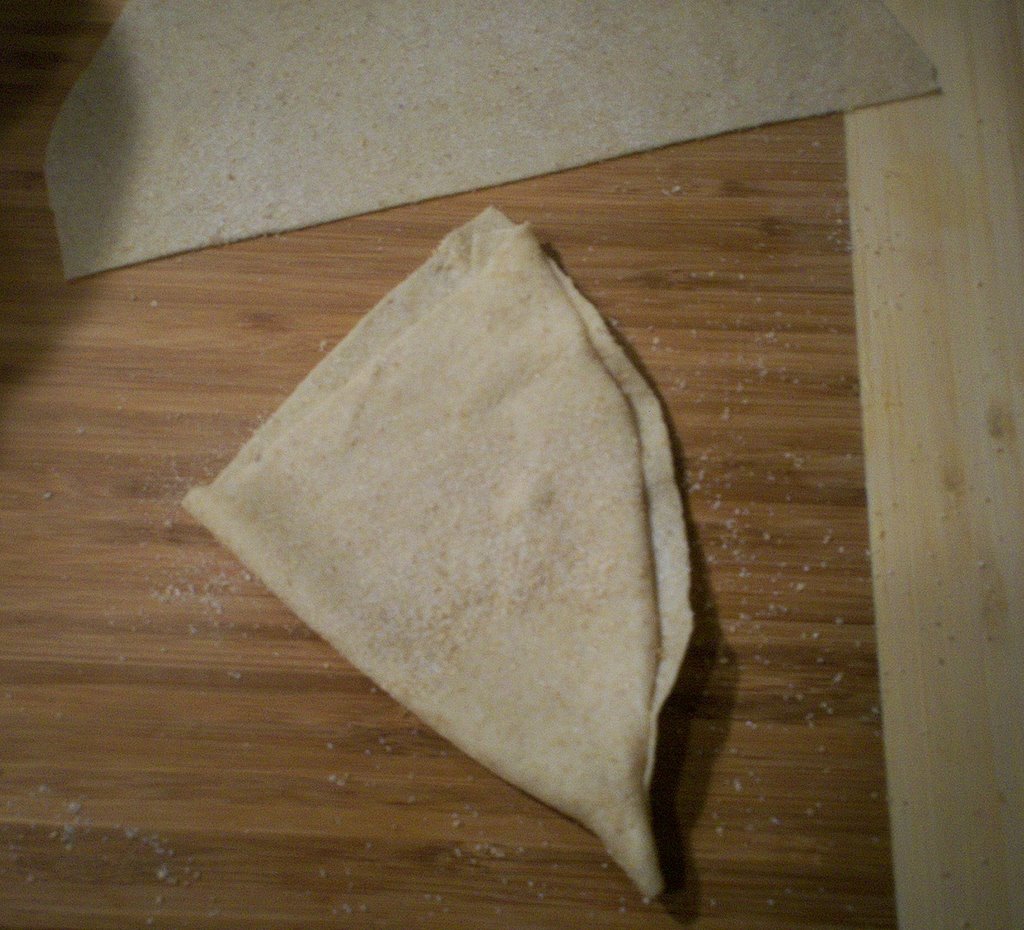
Wet the top rounded edge of the quarter circle, then fold the bottom rounded edge over and gently press, so that you have a hollow cone.


Being careful not to tear the dough, use the small spoon to gently fill the cone 3/4 of the way full.

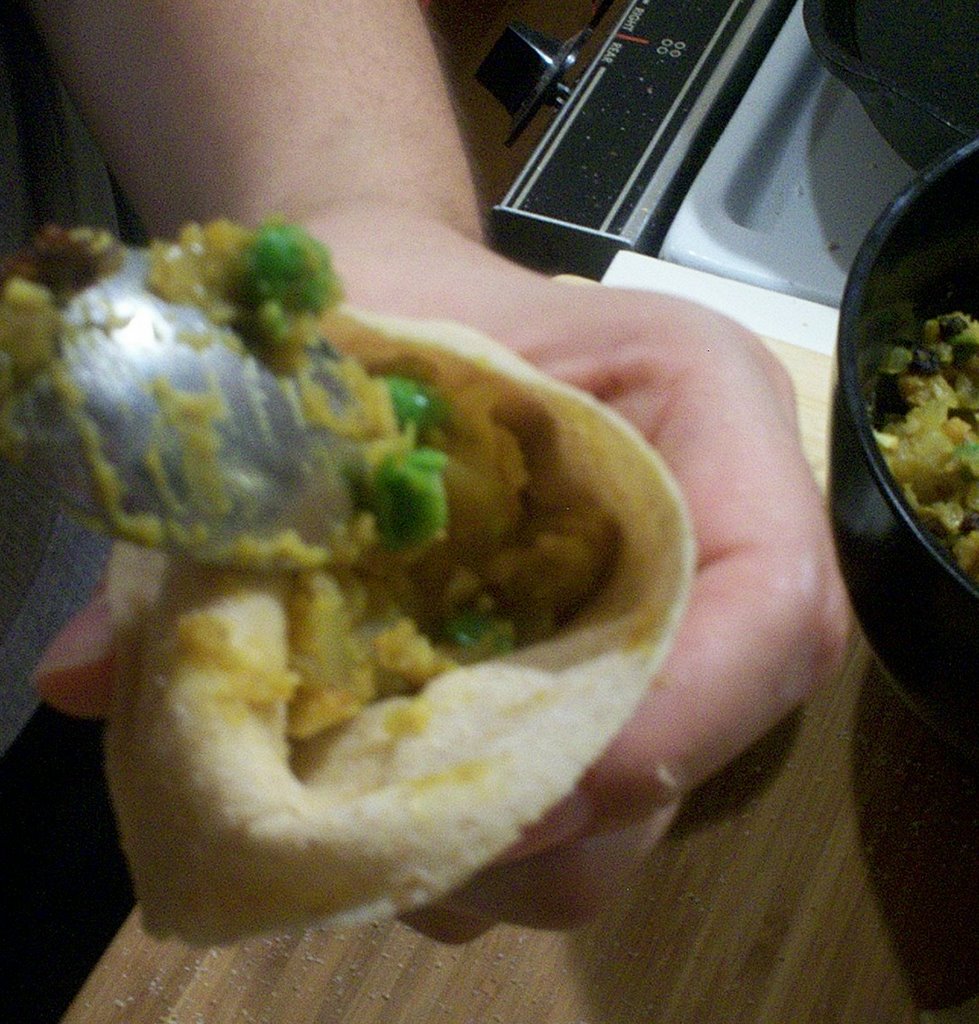
Once the cone is 3/4 of the way full, lay one half of the unfilled portion of the cone down over the filling.

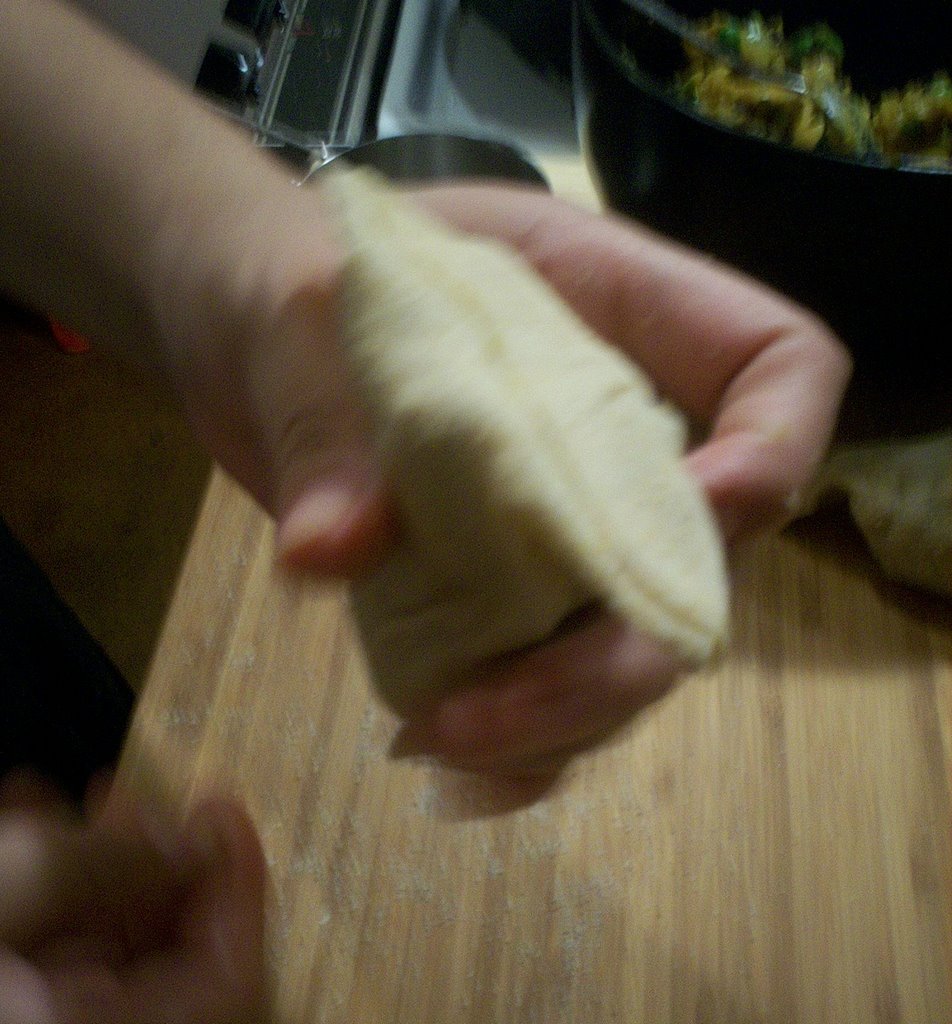
Next, wet the free-standing edge and gently fold and press it over the samosa.
Gently heat the organic safflower oil, rice bran oil, or sunflower oil. I used about 1 cup in an 8 inch cast iron pan, but if you have a tempura pan or something similar, use it, and fill with about 1 inch of oil. Oil is hot enough when a wooden chopstick inserted into the oil bubbles, or alternately, when a small, dry piece of dough is dropped in the oil and it bobs up to the surface almost immediately. Be careful to make sure oil does not smoke.

When oil is hot, gently place a few samosas in pan being careful not to overcrowd pan. Samosas will need to be turned at least once. If samosas are especially full, they may have three sides to brown. When a samosa is brown on all sides, remove it and let it drain on paper towels. I use cooking chopsticks for this as they give me more control and make less of a mess than skimmers.

Serve samosas warm. Especially delicious with chutney.


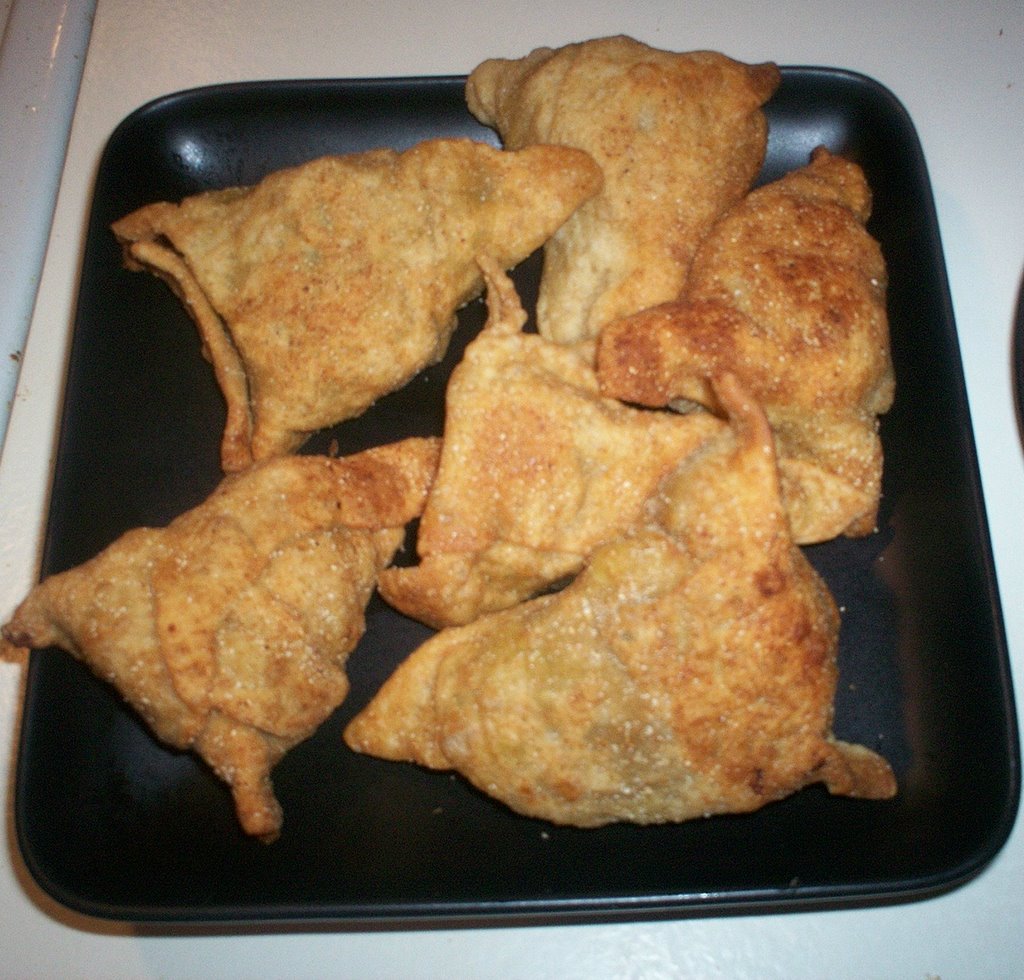
Samosas filled with curried potatoes, peas, almonds and currants.
Notes:

You may use unbleached white flour or regular whole wheat (or even spelt flour), but I've found that the color and texture are best when I use white wheat flour. White wheat flour is a whole wheat flour that is made from a lighter variety of wheat, so it is lighter in color and softer, but still contains the bran, which gives it more texture and nutritional value than white flour (which contains no bran). It's kind of like the difference between white rice and brown rice. Neither whole wheat flour nor white wheat flour are really whole grains, though. Flours, by definition, cannot be whole grains as they have been ground. I have not tried to make any gluten-free samosas, but I'm sure garbanzo bean flour would be appropriate as far as taste.

Friday, November 24, 2006

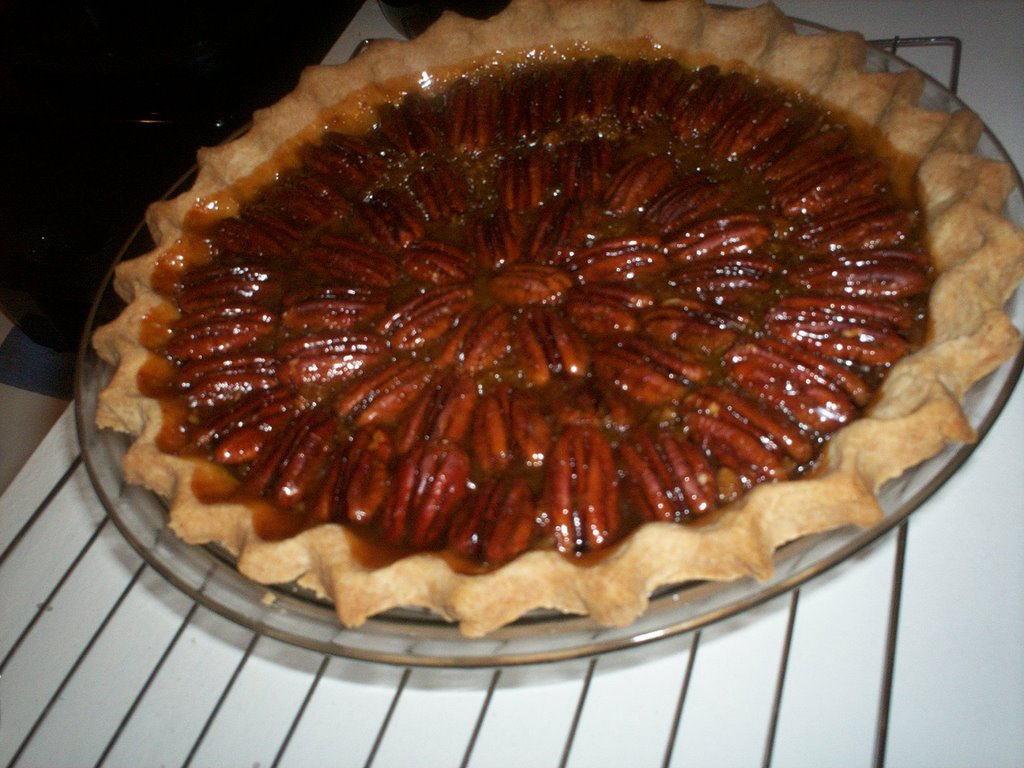
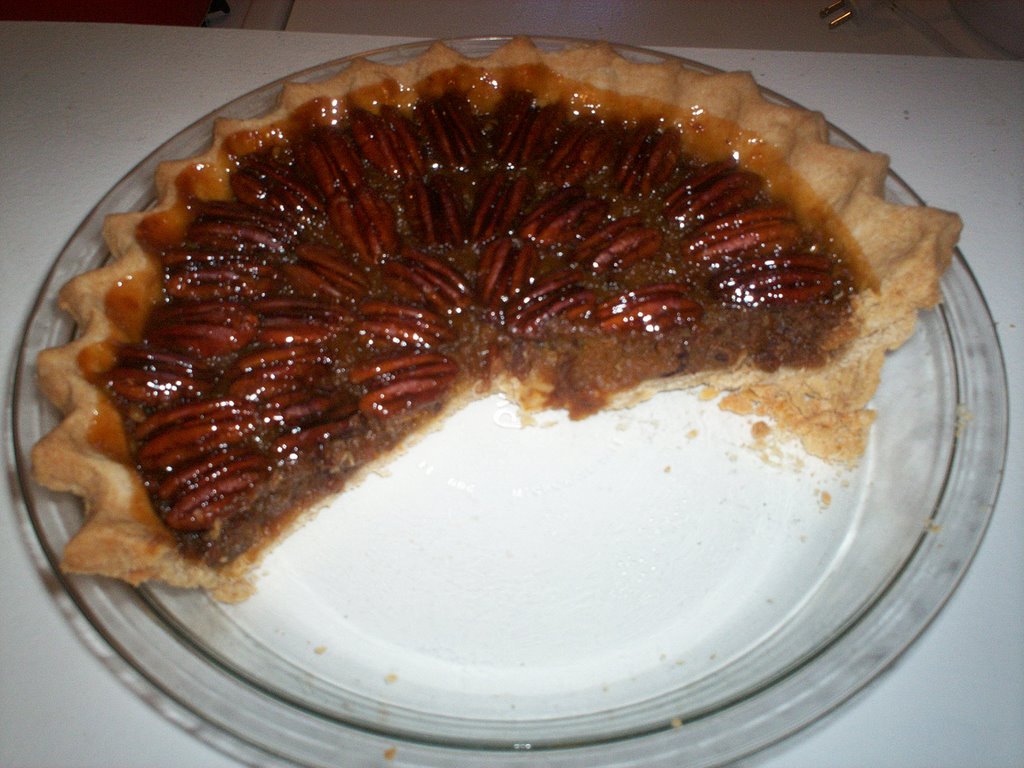
Perfect Vegan Pecan Pie, Part 2: Pie Filling


Christina’s Perfect Vegan Pecan Pie
Christina Terriquez

Yield: One 9-inch pie
Baking time: 50-65 minutes

1 9-inch organic partially baked pie crust
1/4 cup organic unsweetened soymilk
½ cup organic silken or soft tofu
3/4 cup organic steamed or nishimi-style cooked Kabocha (HokaiddoPumpkin) squash
4 teaspoons organic safflower oil
1 ½ cups organic rice syrup, Lundberg Farms Organic recommended
1 pinch of SI sea salt
1 teaspoon organic vanilla extract
1 cup organic pecans toasted and finely chopped, plus
1-1 ½ cups organic whole toasted pecans for topping

1. Preheat oven to 350º.

2. Blend soymilk, tofu and squash until smooth using an immersion blender.

3. Boil safflower oil, rice syrup, and sea salt on medium heat until foamy (about 3-5 minutes).

4. Reserve 1/3 cup of rice syrup mixture.

5. Blend rice syrup mixture and squash mixture together.

6. Add chopped pecans and stir to incorporate.

7. Pour mixture into prepared, baked pie crust.

8. Arrange whole pecans on top of pie.


9. Gently use reserved rice syrup to glaze the pecans.

10. Bake pie for 55-85 minutes, until top is bubbly and pie is very aromatic.


11. Let pie cool thoroughly, about two hours or overnight. Enjoy!


Notes:

Kabocha squash is really the best squash for this recipe since it is sweet and slightly dry but super creamy. I buy organic kabochas, seed and cut off any woody parts of the skin, but leave green skin on for the gorgeous color contrast. The skin melts in your mouth. If you are unable to find kabocha, you can substitute butternut or acorn, but please try kabochas if you ever find any, they are unbelievably good simply steamed with a pinch of sea salt. Canned pumpkin can also be substituted.

Traditional pecan pies are mostly eggs and dark karo syrup. In my adaptation, I've cut the amount of syrup down a bit, and taken out the eggs altogether. I always found pecan pie to be a bit too sweet for me. The squash and soy make up for the egg's absence and add a creamy richness. If you'll notice in the pictures, the glazing step makes all the difference in making this pie look like a pecan pie, and it also adds a nice crunch to the pecans.

Perfect Vegan Pecan Pie, Part 1: Pie Crust


All-Purpose Vegan Pie Crust
Christina Terriquez

Yield: One 9-inch pie shell
Baking time: 10 minutes

1 cup organic whole spelt flour or whole wheat flour
1 cup organic white spelt flour or unbleached white flour
½ teaspoon unrefined sea salt
½-3/4 cup cold organic safflower oil
1/4 cup cold organic, unsweetened soymilk

1. Stir flours and salt together in a large bowl with a fork. Add oil, mixing with fork while pouring over dry ingredients. Mixture should resemble pea-sized crumbs when oil has been incorporated.


2. Add 1/4 cup soymilk and gently mix. If dough is too dry, add more soymilk 1 tablespoon at a time until dough comes together. Being careful not to knead, as kneading will develop gluten and make crust tough, form dough into a ball with hands.

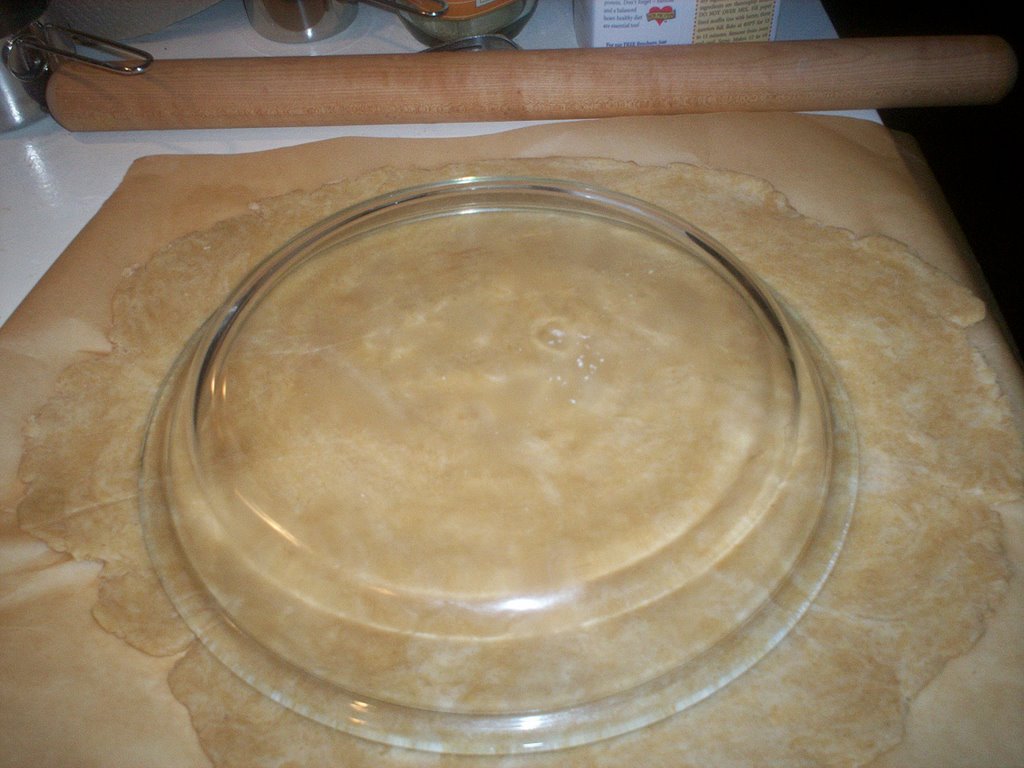
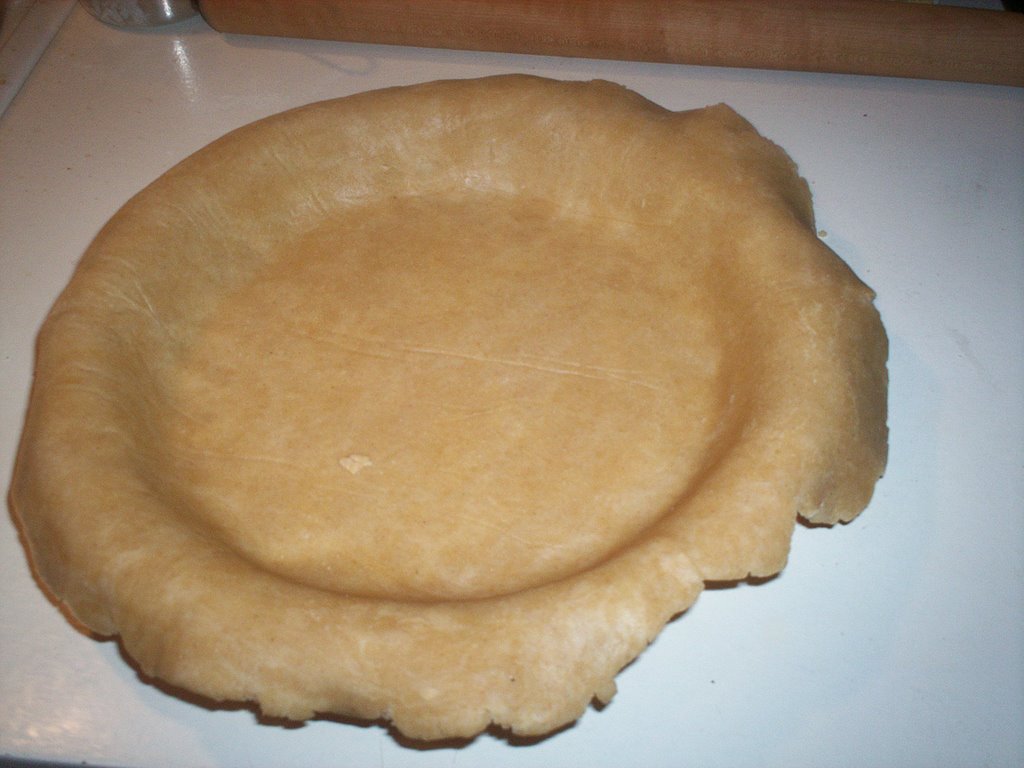
3. Flatten dough into a 5-inch disk and place on a large sheet of unbleached parchment paper that measures at least 12 inches in diameter. Center a second sheet of paper of equal size, over the dough. Roll dough into 12-inch circle, pressing rolling pin against center of dough and pushing out towards edges. Turn dough and continue rolling until dough reaches desired size.

4. Remove and discard top sheet of paper. Center an inverted 9-inch pie plate over dough. Slide hand under remaining sheet of parchment paper and carefully invert paper, dough, and pie plate in one motion. Remove and discard parchment paper.

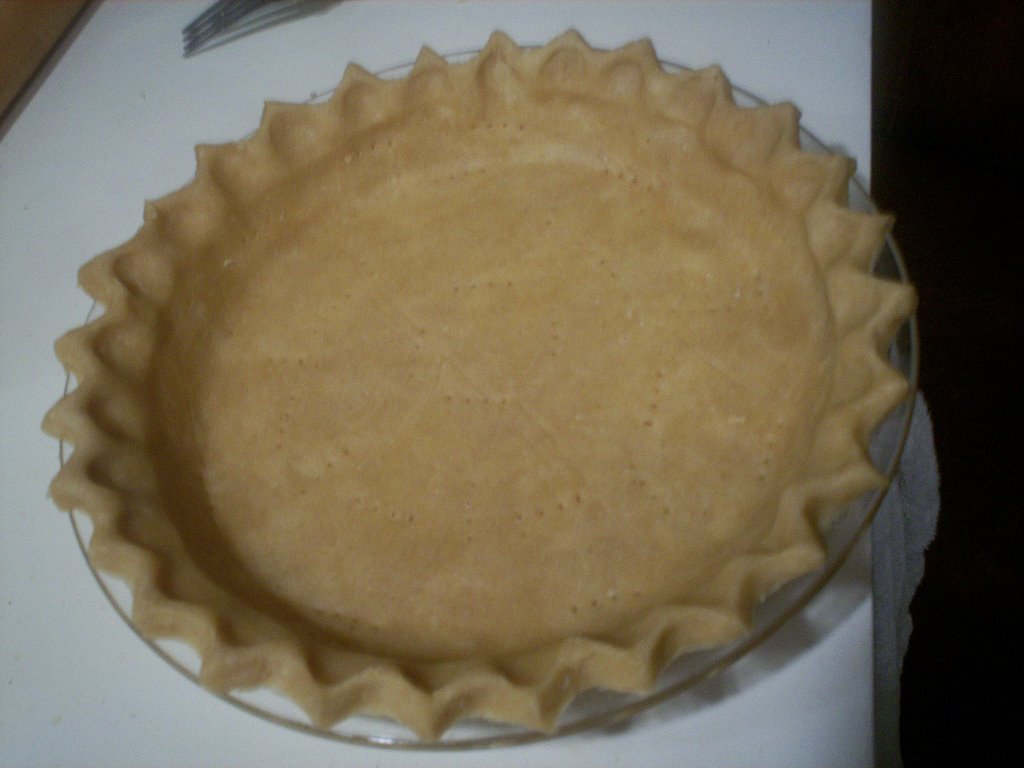
Press dough into edges of pie plate. Trim excess dough to within 1/4 inch of rim. Flute edge as desired.


5. The classic pinched flute edge: starting at the 3 o'clock point on the pie, use your right thumb and forefinger to pinch the rim of dough, while using your left thumb to press down the mound created, thus forming a small "v" shape. Rotate pie plate approximately 1 inch and continue until you've reached the end.


6. Prick bottom of crust, to keep it from bubbling up during baking, and pre-bake crust in a 350º oven for 10 minutes before adding filling, to keep it from becoming soggy.


Notes:

The amount of liquid varies based on freshness of flour, humidity, and type of flour. Spelt flour does not absorb liquid as well as wheat flour does, so when you bake with spelt, you may need to reduce flour by as much as 1/4.

To ease rolling and avoid dryness, roll crust out as soon as it is made. I recommend making, rolling and partially baking crust all at once to avoid dry, cracked edges.

Parchment (or waxed paper) is essential to making this crust. Parchment enables you to easily roll the dough without adding more flour to keep the dough from sticking to your counter or cutting board, and it enables you to easily flip the crust into your pie plate. I use unbleached parchment.

The classic pinched flute edge is simple but seems impressive. It looks like you spent hours, but takes less than five minutes.