Thursday, December 14, 2006

The ugly side of soyfoods

This morning I read an article titled, "Soy is making kids 'gay'". Here is an except:


Soy is feminizing, and commonly leads to a decrease in the size of the penis, sexual confusion and homosexuality. That's why most of the medical (not socio-spiritual) blame for today's rise in homosexuality must fall upon the rise in soy formula and other soy products. (Most babies are bottle-fed during some part of their infancy, and one-fourth of them are getting soy milk!) Homosexuals often argue that their homosexuality is inborn because "I can't remember a time when I wasn't homosexual." No, homosexuality is always deviant. But now many of them can truthfully say that they can't remember a time when excess estrogen wasn't influencing them.
I felt compelled to email Mr. Rutz, so here is my letter:

Mr. Rutz,

Your article titled, "Soy is making kids 'gay'" is not only unbalanced and alarmist, but it contains huge generalizations. Soy products should not be lumped into one big category. There are many types, for example:

Edamame - whole, fresh or frozen green soybeans, which are similar to green peas

Yellow or Black soybeans - whole, dried soybeans you cook like other beans such as pinto beans or chick peas

Natto - dried soybeans, cooked and fermented (generally a day or two) with a spore.

Miso - dried soybeans, cooked and fermented (usually three months to three years) with a grain that has been treated with the koji spore.

Soy Sauce, Tamari or Shoyu - traditionally, the liquid that accumulated as a result of fermenting soybeans for miso. Now, most soy sauce is artificially produced by "fermenting" with alcohol. Look for alcohol-free brands, which will be much higher quality and have a milder flavor. Shoyu is (usually) traditionally brewed Japanese soy sauce, the most common brand being Nama Shoyu. Tamari used to be wheat-free, but celiacs should read ingredients carefully, as some contain wheat or barley flour.

Tempeh - dried soybeans, cooked and fermented (usually for a day or two) with a spore.

Soymilk - dried soybeans, soaked in water, then pulverized in blender with boiling water, liquid strained and cooked.

Okara - byproduct of soy milk, the fiber left over from making soy milk.

Tofu, regular - "the cheese of the soy world", tofu is made from curds of soy milk, so after soy milk has been cooked, a coagulant is added, typically nigari, calcium sulfate, calcium chloride, magnesium chloride or for home producers, even lemon juice. Tofu made with calcium sulfate, and calcium chloride naturally have more calcium than tofu made with other coagulants.

Tofu, silken - I am a little unclear on the exact production of silken tofu, but commercial manufacturers use isolated soy protein or soy isolates, which are heavily refined and NOT whole foods.

Texturized Vegetable Protein - again, I am a little unclear on the exact production of TVP, however, unlike the other soy foods I have mentioned, CANNOT be produced at home because it involves processing soy flour through a machine at extremely high pressure and a high temperature in order take out the fat and compress it.

As a natural and whole foods educator, while I may recommend any of the first six ingredients, which are whole or fermented foods, I would discourage the use of silken tofu and strongly advise against TVP and foods containing isolated soy proteins. All soy foods are not created equal. While it seems you agree with me on this point, you carelessly gloss over this with your post script addendum by basically saying that the only soy foods you're opposed to are tofu and soy formula.

I believe the foundation of a healthy diet should be whole foods, like whole grains, legumes, vegetables, mineral-rich condiments, and expeller-pressed oils. Everything else should be eaten in moderation. Red wine, chocolate and even cake are fine as occasional treats, but shouldn't be the base of your diet, and neither should any refined foods, including tofu.

In traditional eastern cultures, tofu was considered bad for men's virility and cooling to the libido, but even this was useful. Buddhist monks would eat cold tofu almost medicinally since they had taken vows of celibacy.

All foods are more appropriate for certain people and less appropriate for others. Alcohol is not really appropriate for pregnant or nursing women or children, maple syrup and honey are not appropriate for diabetics, and a diet of hamburgers, french fries and milkshakes, while unhealthy for anyone, is especially inappropriate for anyone with high blood pressure or high cholesterol. Soy foods, with their high phyto-estrogen content, are generally more appropriate for women than men, and can even be useful in hormone replacement for menopausal women.

In regard to the headline of your article, your article really only touches on male homosexuality by discussing the "feminization" of males. How would you explain female homosexuality?

Instead of vilifying the lowly soybean and alarming consumers and parents, perhaps you could help educate them. The most commercially used soy foods are high-heat refined soybean oil and texturized vegetable protein, both of which are highly processed and unhealthy. These are usually found in packaged convience foods such as chips and microwavable burritos which, I think everyone can agree, are not recommended for anyone. Perhaps you could advise against these types of foods and encourage simple, home cooked meals and moderation for your readers.

A more thoughtful approach to stories that emphasize "the evils of soy foods" might touch on topics such as soy additives/fillers in foods, overuse of foods such as soy and wheat leading to allergies, subjective research being used to market products as health-promoting and certain industries being ready and willing to jump on any bandwagon that will generate revenue, ie. companies seeing that soy foods are "hot" right now, so using them in everything.

In health,
Christina
One of the major problems I have with articles like this (other than the obvious lack of information) is that they offer no solution. He tells us you can hardly escape soy foods anymore, but doesn't tell us what ingredients to avoid on labels, or tell us alternatives. This, in my opinion is very sloppy and alarmist.

Mr. Rutz says not to "even think about" giving children soy formula. Yet he doesn't mention that cow's formula contains hormones like BGH and tons of antibiotics and that the best thing you could do would be to breast feed or join a group like La Leche League to milk-share. He never gives any advice for what you do if you are unable to breastfeed, use cow's milk formula, OR soy formula. What about grain formulas like rice or oat formula? Grains are much easier to digest than beans, so they seem like a perfect choice for babies with digestion problems. You can even find recipes to make your own here.

Mr. Rutz could help our society by encouraging women to breast feed their children. I used to see a billboard that said something along the lines of "Breasts were made for babies", with a picture of a nursing baby. I loved it. It's healthier for both the baby and the mother, it reduces the chances of ear infections, and it may even help brain development, however I have a feeling that Mr. Rutz may feel that promoting breastfeeding would be promoting deviant and immodest behavior.

Monday, December 4, 2006

Quick update..

I have a tons of posts that I need to catch up on, including samosas, Thanksgiving dinner and Thanksgiving leftovers, but I haven't had time! Last week I was inundated with water troubles--no water, toilet that ran all day/wouldn't flush/handle broke clean off. With less than two weeks before I leave to visit my family, I'm going to be a busy, busy girl.....

But! I had to write up a quick post about some of the fabulous finds I made last week:
White Cyprus Salt (looks like pyramids)
Dried Lavender
Essentials of Clove, Lemon, Orange and Peppermint
Unusual natural extracts including Cherry, Raspberry, Mango
Half a pound of organic Tahitian Vanilla Beans for under 12 bucks!
Plus a few rare/hard to find gifts at great prices for loved ones, all via Ebay.

I'm sure these items will give me much to post about.

Tonight I'm going to attempt vegan stuffed naan, maybe a nice pashwari naan.

Friday, November 24, 2006

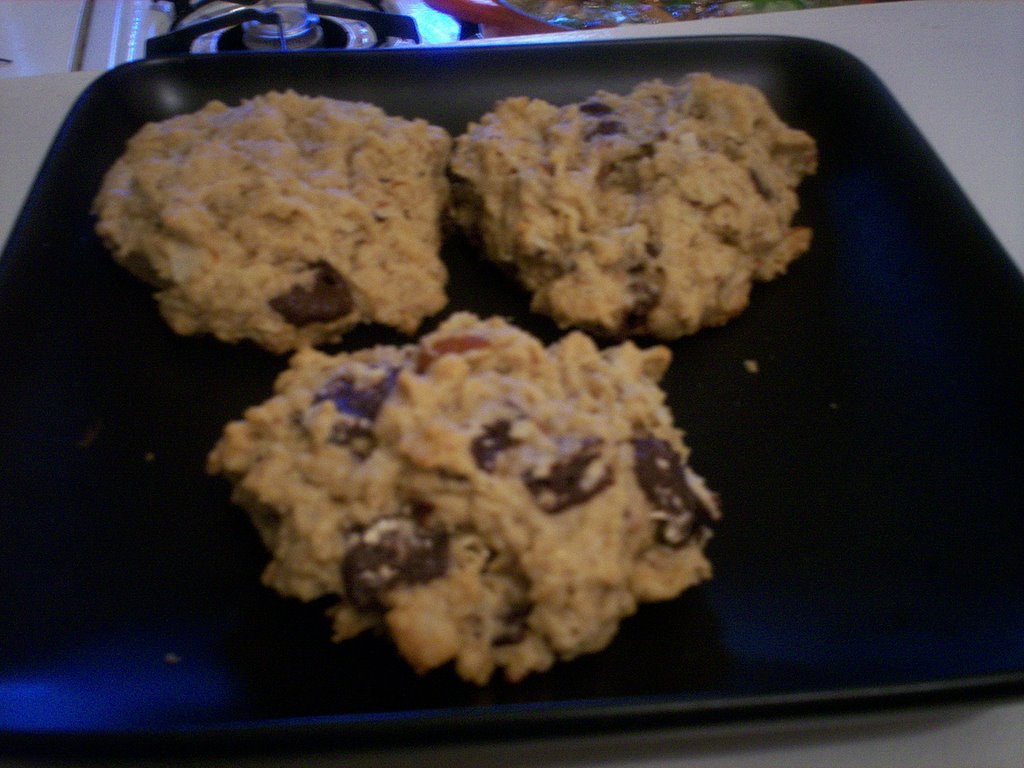
Almond Bliss Scones

JD decided he wanted to make a 20-pound turkey for Thanksgiving. Since we both live (separately) in apartments with tiny kitchens, we decided that he'd make all the non-vegan essentials--turkey, giblet gravy and stuffing (plus a small batch of vegan dressing), at his place, and I'd make all the other dishes vegan-friendly, at my place. We had agreed on a 6 pm dinner. But the turkey wasn't going to be done by then, so we pushed it back to 7 and I cooked all my dishes at a leisurely pace, watching a movie and relaxing as I prepped so that everything would be fresh and hot when the turkey was ready....when it wasn't done at 7, and I had already cleaned my kitchen, I decided to whip up a quick batch of scones, since the oven was already at the proper tempurature.

These scones feature almonds, coconut, and chocolate (like those candy bars), are a joy to make, but absolutely blissful to eat. I made similar scones for JD's family the first time I met them, and they all loved them. I've never met anyone who didn't like these, and a batch never lasts more than twenty four hours.


Almond Bliss Scones
Christina Terriquez

Yields: 6-9 scones
Baking time: 20-25 minutes

1 cup organic whole wheat or whole spelt flour
1 cup organic unbleached white flour or white spelt flour
1 teaspoon baking powder
1 pinch unrefined sea salt
1/2 cup safflower oil or vegan butter substitute such as Earth Balance or Soy Garden
1/2 cup agave nectar, maple syrup or organic unrefined sugar
1 teaspoon vanilla extract
1 teaspoon almond extract (optional)
1/4 cup dairy-free, fair trade dark chocolate chips (or your favorite vegan chocolate bar, chopped)
1/4 cup almonds, coarsely chopped
1/4 cup unsweetened coconut flakes
1/2-1 cup unsweetened soymilk

Preheat oven to 350 degrees.

Sift flours, baking powder and salt in a bowl.

In a separate large bowl, mix sweetener and oil or margarine with extracts. Add dry ingredients and mix until a sandy texture is reached. Add chocolate, almonds, coconut and mix well. Add 1/2 cup soymilk and stir gently. If dough is too dry add a bit more soymilk, being careful not to overmix.

Scoop by 1/4 cup scoops onto a stainless steel cookie sheet or glass baking dish. Bake for about 20-25 minutes.

Notes:

I like to use the big coconut flakes, but you could use shredded coconut

This recipe is very easy to change. I like making cranberry coconut walnut scones, or chocolate pecan scones. Simply substitute 1/4 cup of up to three of your favorite ingredients in place of the coconut, almonds and/or the chocolate.

Great with coffee, tea or grain coffee as a light breakfast or for dessert.
The last bite

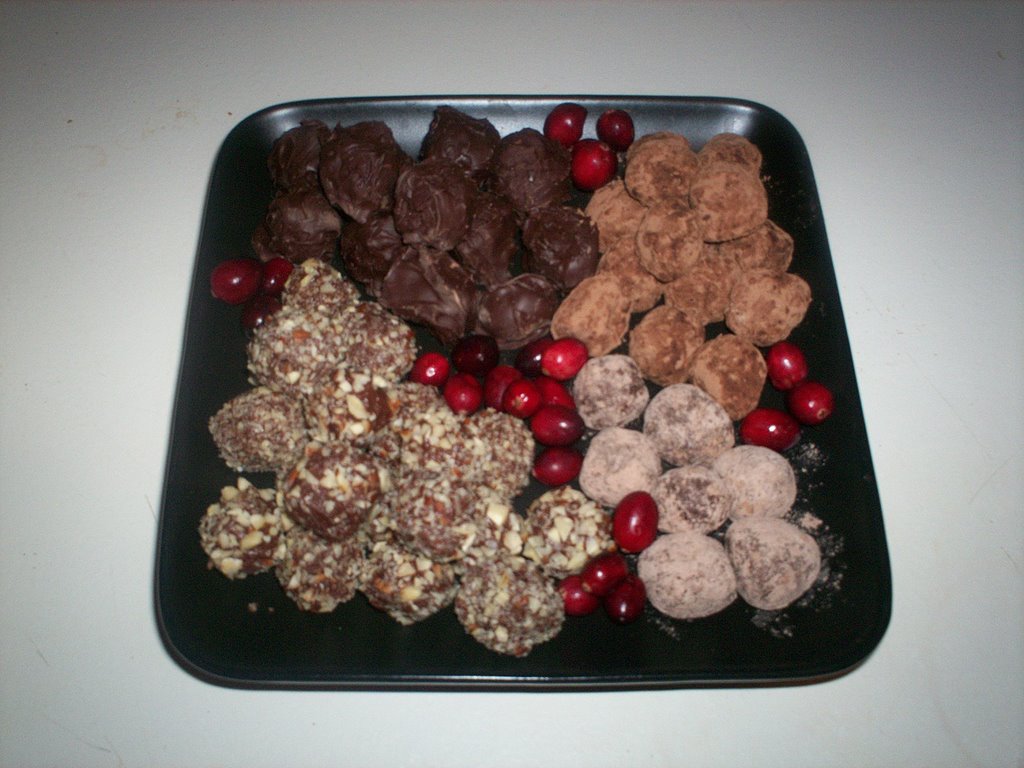
Sugar High Fridays: Pomegranate Truffles, Hazelnut Macadamia Truffles, and Peppermint Truffles


I am participating in my first blog event, Sugar High Fridays. I used a few of my tried and true vegan truffle recipes, and decided to create a new and unexpected recipe using a seasonal fruit, the pomegranate! In case you're unfamiliar, truffles are notoriously hard to veganize (by the way, if you're avoiding refined sugar, I have grain-sweetened truffle recipes, but I didn't have time to make any before the Sugar High Fridays deadline. Post a comment if you're interested).

The pomegranate truffles came out better than I could have imagined. The chocolate covered version is amazing: the center melts as soon as it enters your mouth, so when you take a bite, or press your tongue against it, the tart liquid explodes in your mouth, the coating collapses, and the only tangible thing you have is the rich chocolate coating, slowly melting away. I will definitely use this ganache recipe again for truffles, as a sauce for a simple cake and maybe even as a chocolate fondue. (It reminded me of something from Chocolat, and I told JD I thought it was sinfully sensual and sexy. He said he never understood why people considered chocolate "sexy". I balked. He said I was sexy, then proceeded to lick the ganache from my fingers--after I had finished rolling all the truffles-- and we both agreed that that was sexy.)

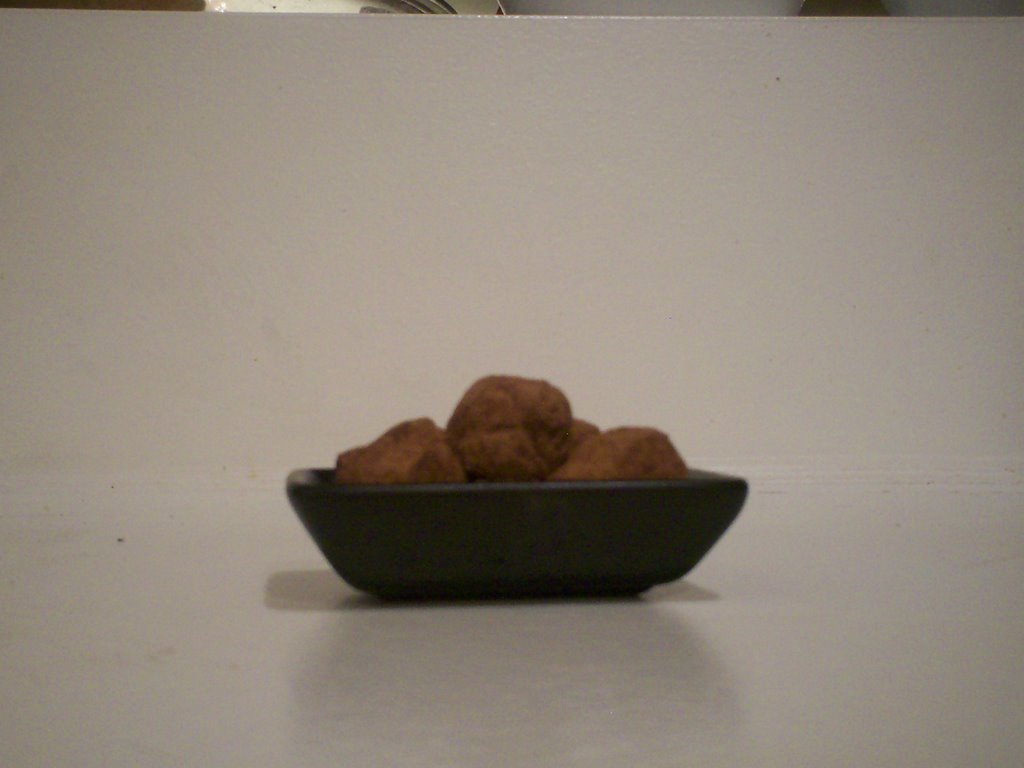
The cocoa/powdered sugar covered pomegranate truffles are lovely in a less in-your-face kind of way. The powdered sugar cuts the tartness a bit and makes the ganache a little bit more solid. For these I used Scharffen Berger 99% unsweetened chocolate and Valharona 61% chocolate. Please, use the recommended ingredients and the best quality you can find/afford as it really does make a difference.

I've made a small change to the instructions for the pomegranate truffles. I made them last week and the soymilk and pomegranate mixture curdled and tasted decidely less pomegrante-y. I will be retesting soon, but hopefully these updated instructions will fix that snafu.


Pomegranate Truffles
Christina Terriquez

For filling:
2 oz 99% unsweetened chocolate, chopped (about 1/2 cup)
1 tablespoon organic raw, unrefined coconut butter
1 tablespoon pomegranate pekmez
1 tablespoon organic pomegranate jelly
1/2 cup organic, unsweetened soymilk
1/2 teaspoon vanilla extract
pinch of sea salt or drop of ume vinegar

For garnish:
2 oz 60-65% dairy-free chocolate, chopped
and/or
1/4 organic unrefined sugar, plus
2 tablespoons unsweetened cocoa powder

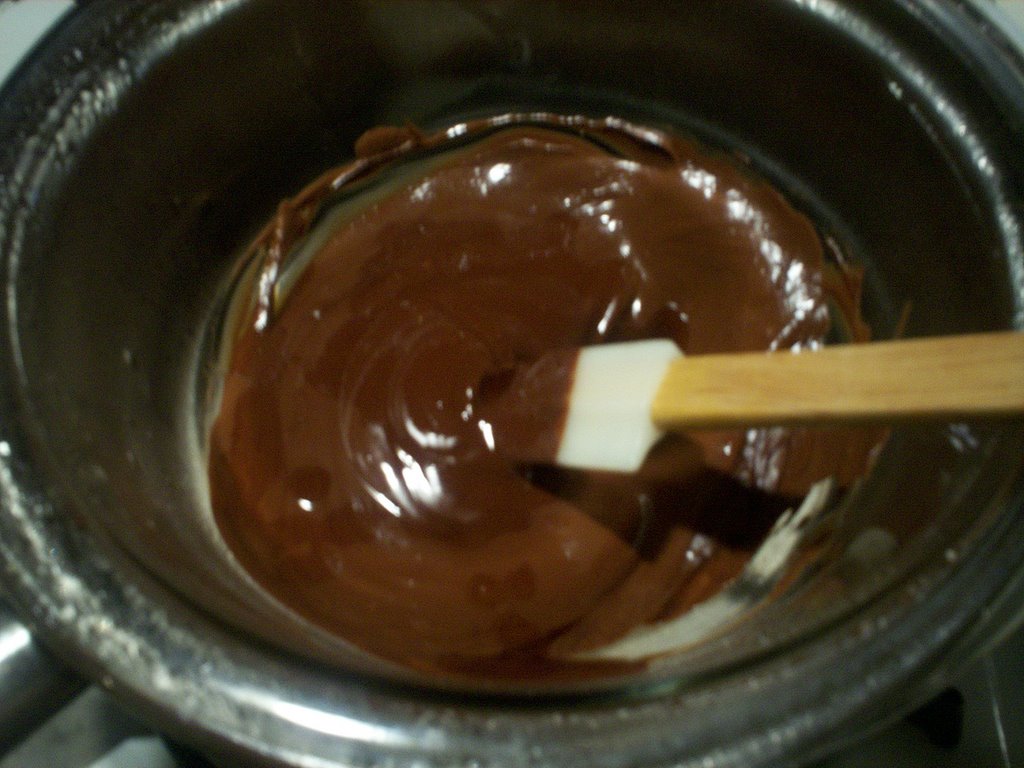
In a double boiler, melt unsweetened chocolate with coconut butter and soymilk.

In a separate bowl, mix pekmez, jelly, salt and vanilla extract and stir thoroughly.

When chocolate is completely melted, carefully remove from heat and stir chocolate into pomegranate mixture and blend well. Refrigerate or freeze until ganache is firm enough to be handled (ten to twenty minutes in freezer).

Working quickly, roll ganache into balls by the teaspoon. Balls will be about 3/4 of an inch in diameter. Place balls on a foil covered plate and freeze for about two minutes.

For chocolate covered truffles:
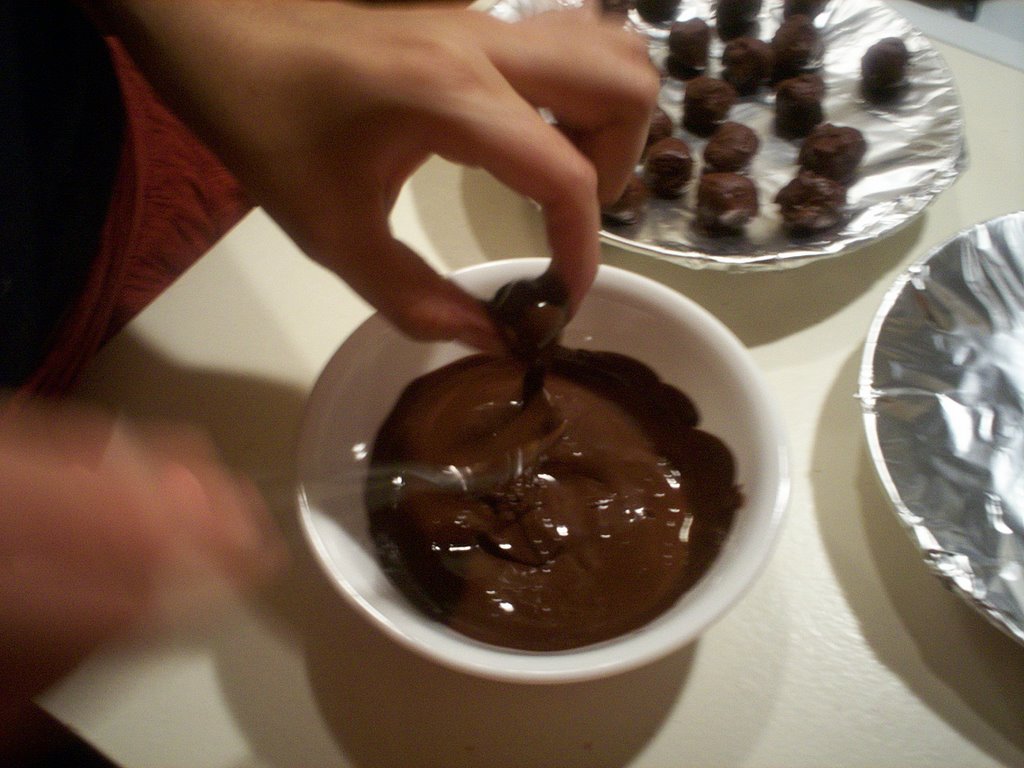
In a double boiler, melt half of the sweetened chocolate. Remove from heat, add half of the remaining chocolate and stir until melted. Add remaining chocolate and stir until melted. Working quickly, dip chilled ganache balls into melted chocolate and place on a foil covered plate.


For cocoa covered truffles:


Mix sugar and cocoa powder then blend in a food processor or blender.

Roll ganache balls in cocoa powder mix. You will need to roll each ball in cocoa a few times.


Hazelnut Macadamia Truffles
Christina Terriquez

For filling:
1/2 cup dairy free dark chocolate chips or 2 oz 60-65%
1 tablespoon organic raw, unrefined coconut butter
2 tablespoons raw macadamia nut butter
pinch of sea salt or drop of ume vinegar
1/2 teaspoon vanilla extract
1/2 teaspoon hazelnut or almond extract

For garnish:
1/4 cup finely chopped toasted hazelnuts or hazelnut meal


In a double boiler, melt chocolate with coconut butter and macadamia nut butter.


When chocolate is completely melted, remove from heat and add salt and extracts. Refrigerate or freeze until chocolate is firm enough to be handled (ten to twenty minutes in freezer).

Working quickly, roll chilled chocolate into balls by the teaspoon. Balls will be about 3/4 of an inch in diameter. Roll balls, one by one in hazelnuts.

Note: Vary this recipe but using different nut butters and rolling in different nuts. Almond butter and toasted almonds work well.


Peppermint Truffles
Christina Terriquez

For filling:
1/2 cup dairy free dark chocolate chips or 2 oz 60-65%
1 tablespoon organic raw, unrefined coconut butter
pinch of sea salt or drop of ume vinegar
1/2-1 teaspoon peppermint extract
1 teaspoon vanilla extract

For garnish:
2-3 tablespoons organic, unsweetened cocoa powder
2 teaspoons raw cacao nibs, chopped finely

In a double boiler, melt chocolate with coconut butter.

When chocolate is completely melted, remove from heat and add salt and extracts. Refrigerate or freeze until chocolate is firm enough to be handled (ten to twenty minutes in freezer).

Mix cocoa powder with cacao nibs in a shallow bowl and set aside.

Working quickly, roll chilled chocolate into balls by the teaspoon. Balls will be about 3/4 of an inch in diameter. Roll balls, one by one in cocoa powder mixture. Balls may need to be rolled in cocoa powder more than once.

Note: These are great as after dinner mints.


Update on 11-26-2006: The (tempered chocolate covered) pomegranate truffles were definitely the favorite, with the hazelnut macadamia easily sliding in second. I was surprised that JD loved the pomegranate so much, especially considering how much he loves hazelnuts. The hazelnut macadamia truffles are lusciously creamy without being so soft that they need to be kept in the fridge, or covered in chocolate.

The peppermint truffles were just a bit dry, but that was my fault, I accidentally used a bit too much vanilla(the alcohol in most extracts seizes the chocolate a bit, which is essential for these recipes, but if you add too much, the chocolate will seize completely. Adding extra peppermint extract is generally fine because 1) it's so strong you can't really add very much and have the end product still be edible and 2) peppermint extract is usually made from peppermint essence and some kind of oil, so it is alcohol free. Rolling the truffles in cocoa powder without coating in tempered chocolate also dries them out, so I may amend this recipe to always cover in tempered chocolate, then roll in cocoa powder. I love the dark, only slightly sweet flavor you get when you roll directly in unsweetened cocoa powder, but I suppose I could retain that aspect if I used 80% chocolate.

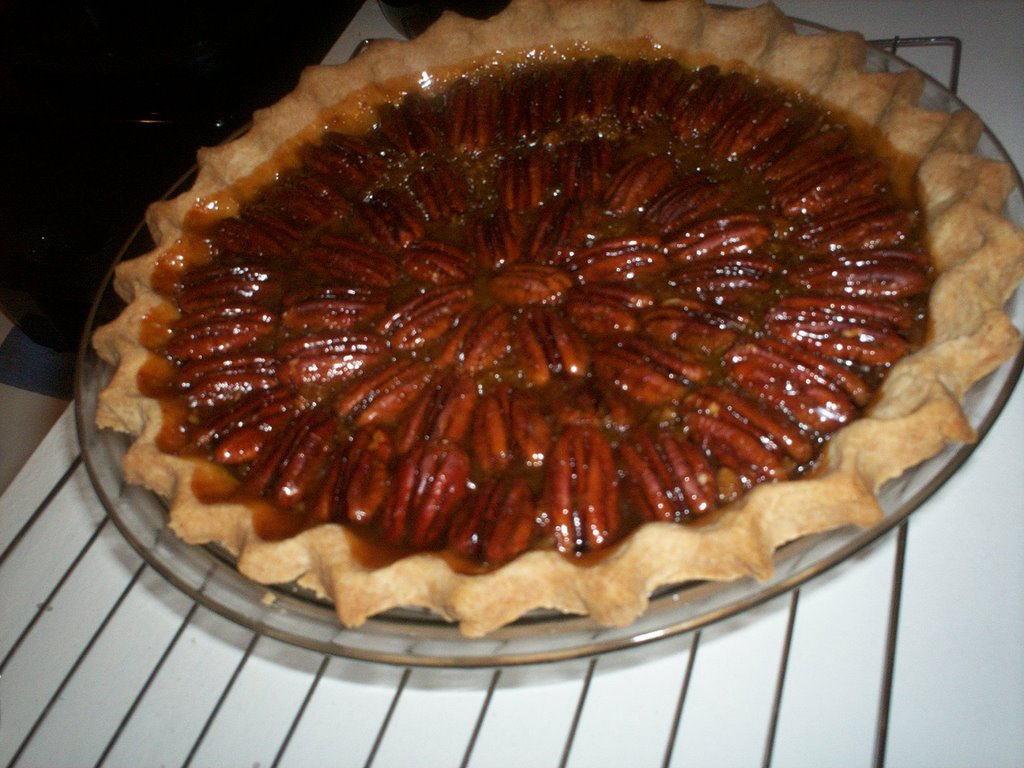
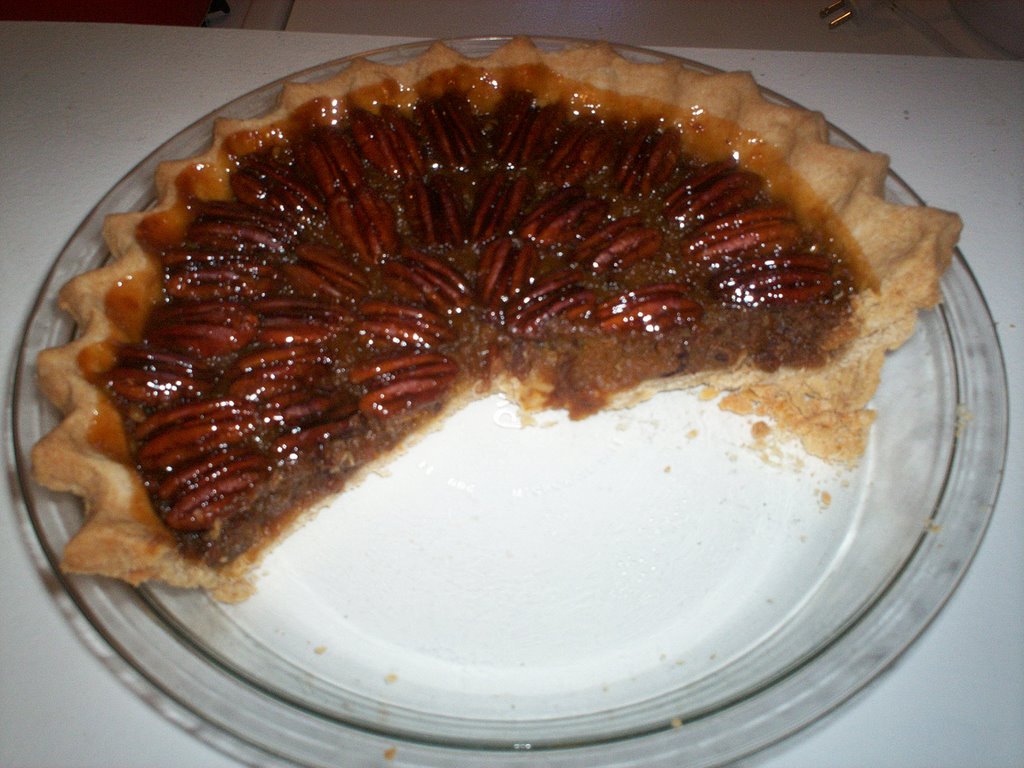
Perfect Vegan Pecan Pie, Part 2: Pie Filling


Christina’s Perfect Vegan Pecan Pie
Christina Terriquez

Yield: One 9-inch pie
Baking time: 50-65 minutes

1 9-inch organic partially baked pie crust
1/4 cup organic unsweetened soymilk
½ cup organic silken or soft tofu
3/4 cup organic steamed or nishimi-style cooked Kabocha (HokaiddoPumpkin) squash
4 teaspoons organic safflower oil
1 ½ cups organic rice syrup, Lundberg Farms Organic recommended
1 pinch of SI sea salt
1 teaspoon organic vanilla extract
1 cup organic pecans toasted and finely chopped, plus
1-1 ½ cups organic whole toasted pecans for topping

1. Preheat oven to 350º.

2. Blend soymilk, tofu and squash until smooth using an immersion blender.

3. Boil safflower oil, rice syrup, and sea salt on medium heat until foamy (about 3-5 minutes).

4. Reserve 1/3 cup of rice syrup mixture.

5. Blend rice syrup mixture and squash mixture together.

6. Add chopped pecans and stir to incorporate.

7. Pour mixture into prepared, baked pie crust.

8. Arrange whole pecans on top of pie.


9. Gently use reserved rice syrup to glaze the pecans.

10. Bake pie for 55-85 minutes, until top is bubbly and pie is very aromatic.


11. Let pie cool thoroughly, about two hours or overnight. Enjoy!


Notes:

Kabocha squash is really the best squash for this recipe since it is sweet and slightly dry but super creamy. I buy organic kabochas, seed and cut off any woody parts of the skin, but leave green skin on for the gorgeous color contrast. The skin melts in your mouth. If you are unable to find kabocha, you can substitute butternut or acorn, but please try kabochas if you ever find any, they are unbelievably good simply steamed with a pinch of sea salt. Canned pumpkin can also be substituted.

Traditional pecan pies are mostly eggs and dark karo syrup. In my adaptation, I've cut the amount of syrup down a bit, and taken out the eggs altogether. I always found pecan pie to be a bit too sweet for me. The squash and soy make up for the egg's absence and add a creamy richness. If you'll notice in the pictures, the glazing step makes all the difference in making this pie look like a pecan pie, and it also adds a nice crunch to the pecans.