Friday, November 24, 2006

Perfect Vegan Pecan Pie, Part 2: Pie Filling


Christina’s Perfect Vegan Pecan Pie
Christina Terriquez

Yield: One 9-inch pie
Baking time: 50-65 minutes

1 9-inch organic partially baked pie crust
1/4 cup organic unsweetened soymilk
½ cup organic silken or soft tofu
3/4 cup organic steamed or nishimi-style cooked Kabocha (HokaiddoPumpkin) squash
4 teaspoons organic safflower oil
1 ½ cups organic rice syrup, Lundberg Farms Organic recommended
1 pinch of SI sea salt
1 teaspoon organic vanilla extract
1 cup organic pecans toasted and finely chopped, plus
1-1 ½ cups organic whole toasted pecans for topping

1. Preheat oven to 350º.

2. Blend soymilk, tofu and squash until smooth using an immersion blender.

3. Boil safflower oil, rice syrup, and sea salt on medium heat until foamy (about 3-5 minutes).

4. Reserve 1/3 cup of rice syrup mixture.

5. Blend rice syrup mixture and squash mixture together.

6. Add chopped pecans and stir to incorporate.

7. Pour mixture into prepared, baked pie crust.

8. Arrange whole pecans on top of pie.


9. Gently use reserved rice syrup to glaze the pecans.

10. Bake pie for 55-85 minutes, until top is bubbly and pie is very aromatic.


11. Let pie cool thoroughly, about two hours or overnight. Enjoy!


Notes:

Kabocha squash is really the best squash for this recipe since it is sweet and slightly dry but super creamy. I buy organic kabochas, seed and cut off any woody parts of the skin, but leave green skin on for the gorgeous color contrast. The skin melts in your mouth. If you are unable to find kabocha, you can substitute butternut or acorn, but please try kabochas if you ever find any, they are unbelievably good simply steamed with a pinch of sea salt. Canned pumpkin can also be substituted.

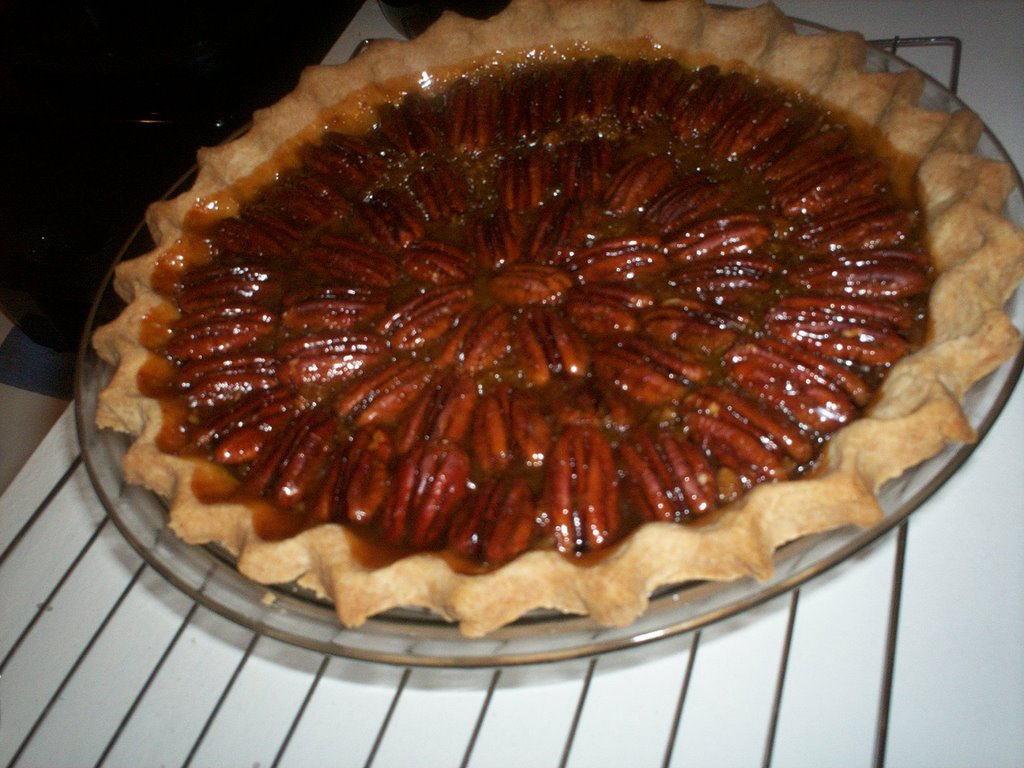
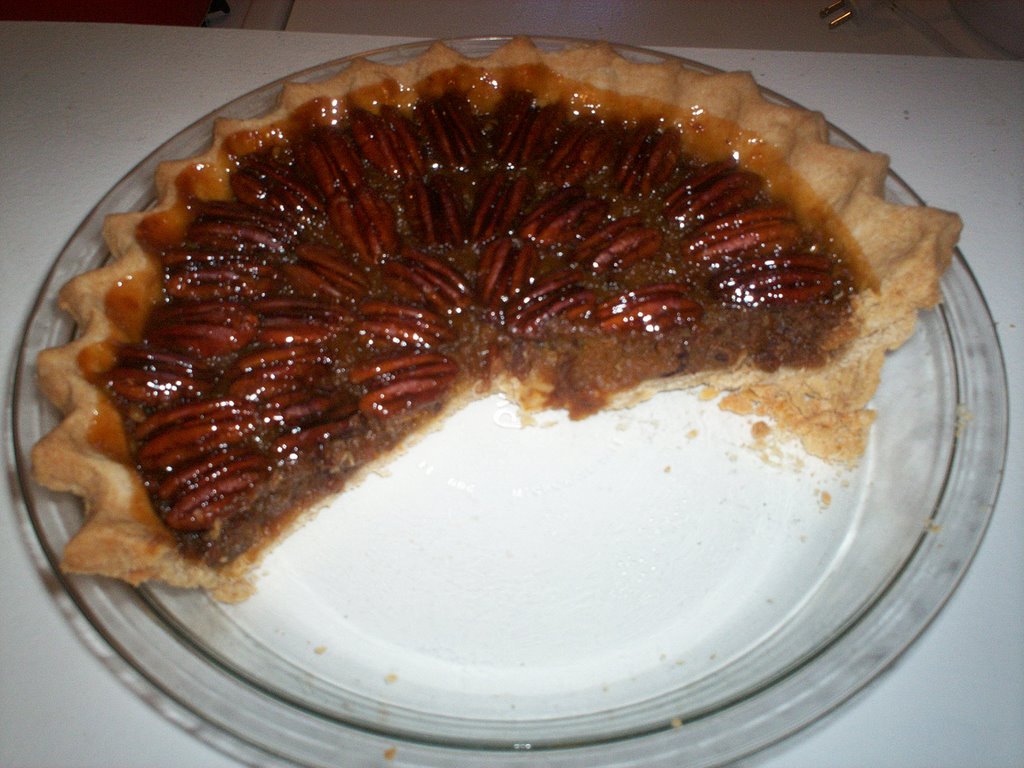
Traditional pecan pies are mostly eggs and dark karo syrup. In my adaptation, I've cut the amount of syrup down a bit, and taken out the eggs altogether. I always found pecan pie to be a bit too sweet for me. The squash and soy make up for the egg's absence and add a creamy richness. If you'll notice in the pictures, the glazing step makes all the difference in making this pie look like a pecan pie, and it also adds a nice crunch to the pecans.

Perfect Vegan Pecan Pie, Part 1: Pie Crust


All-Purpose Vegan Pie Crust
Christina Terriquez

Yield: One 9-inch pie shell
Baking time: 10 minutes

1 cup organic whole spelt flour or whole wheat flour
1 cup organic white spelt flour or unbleached white flour
½ teaspoon unrefined sea salt
½-3/4 cup cold organic safflower oil
1/4 cup cold organic, unsweetened soymilk

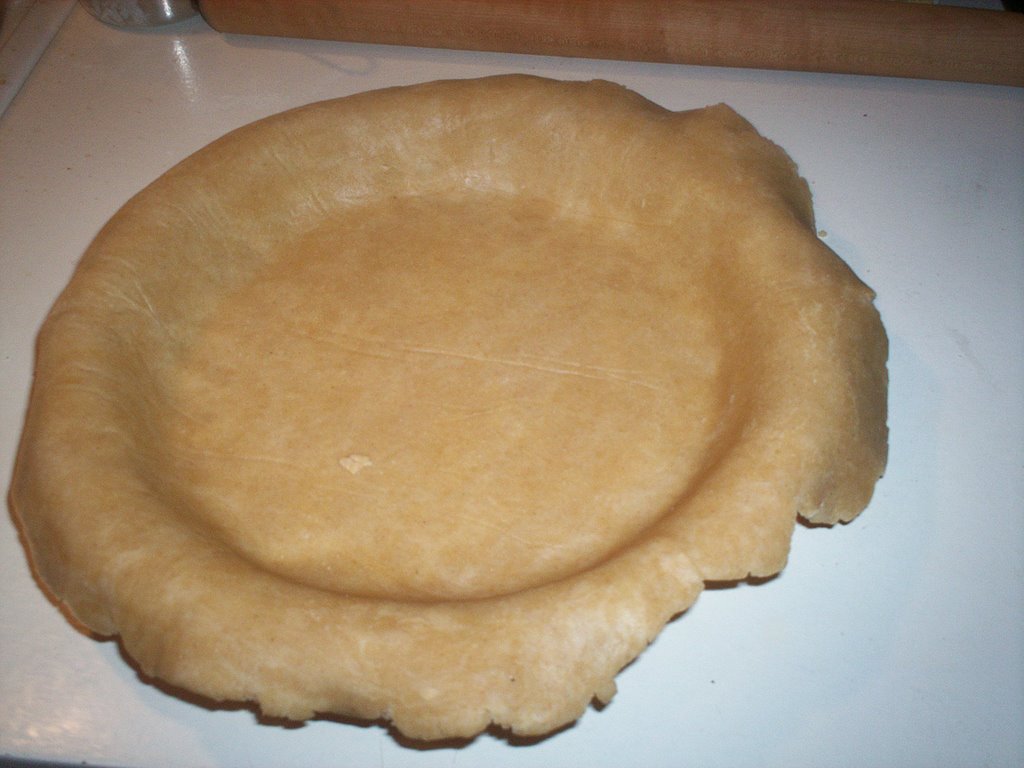
1. Stir flours and salt together in a large bowl with a fork. Add oil, mixing with fork while pouring over dry ingredients. Mixture should resemble pea-sized crumbs when oil has been incorporated.


2. Add 1/4 cup soymilk and gently mix. If dough is too dry, add more soymilk 1 tablespoon at a time until dough comes together. Being careful not to knead, as kneading will develop gluten and make crust tough, form dough into a ball with hands.

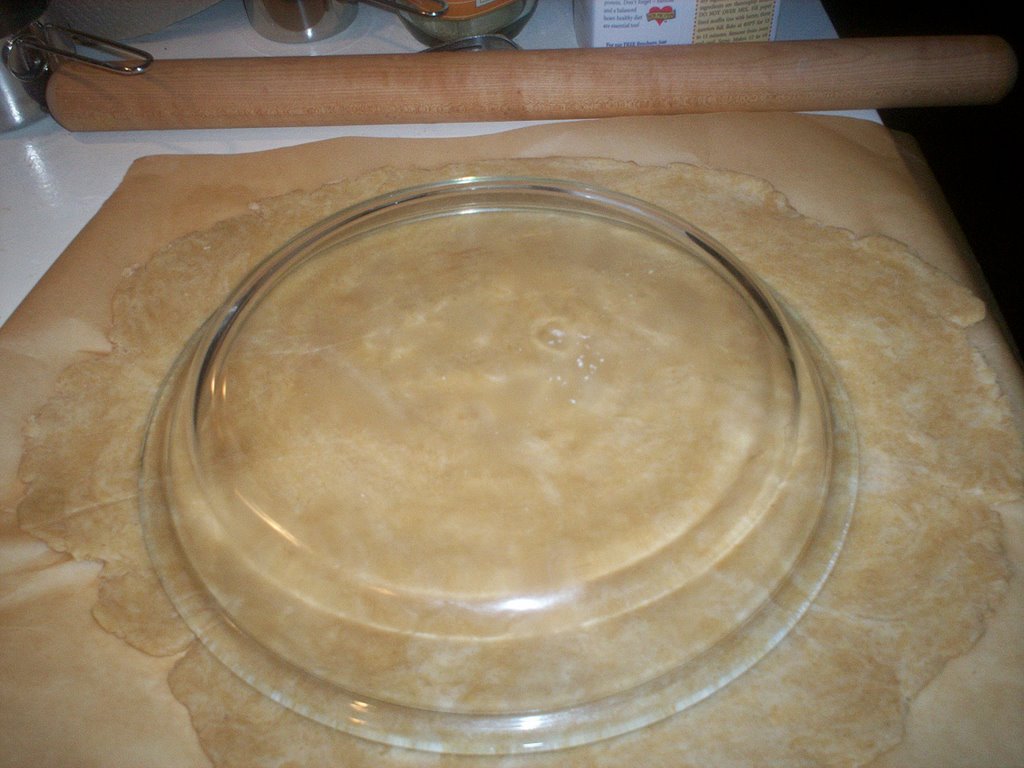
3. Flatten dough into a 5-inch disk and place on a large sheet of unbleached parchment paper that measures at least 12 inches in diameter. Center a second sheet of paper of equal size, over the dough. Roll dough into 12-inch circle, pressing rolling pin against center of dough and pushing out towards edges. Turn dough and continue rolling until dough reaches desired size.

4. Remove and discard top sheet of paper. Center an inverted 9-inch pie plate over dough. Slide hand under remaining sheet of parchment paper and carefully invert paper, dough, and pie plate in one motion. Remove and discard parchment paper.

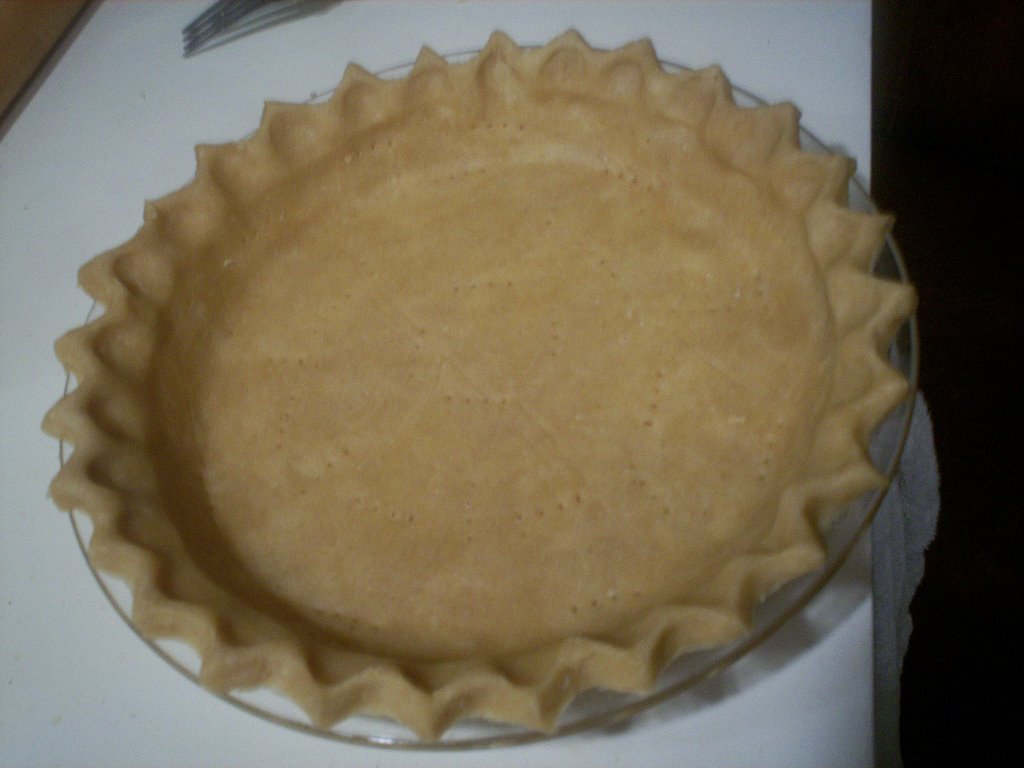
Press dough into edges of pie plate. Trim excess dough to within 1/4 inch of rim. Flute edge as desired.


5. The classic pinched flute edge: starting at the 3 o'clock point on the pie, use your right thumb and forefinger to pinch the rim of dough, while using your left thumb to press down the mound created, thus forming a small "v" shape. Rotate pie plate approximately 1 inch and continue until you've reached the end.


6. Prick bottom of crust, to keep it from bubbling up during baking, and pre-bake crust in a 350º oven for 10 minutes before adding filling, to keep it from becoming soggy.


Notes:

The amount of liquid varies based on freshness of flour, humidity, and type of flour. Spelt flour does not absorb liquid as well as wheat flour does, so when you bake with spelt, you may need to reduce flour by as much as 1/4.

To ease rolling and avoid dryness, roll crust out as soon as it is made. I recommend making, rolling and partially baking crust all at once to avoid dry, cracked edges.

Parchment (or waxed paper) is essential to making this crust. Parchment enables you to easily roll the dough without adding more flour to keep the dough from sticking to your counter or cutting board, and it enables you to easily flip the crust into your pie plate. I use unbleached parchment.

The classic pinched flute edge is simple but seems impressive. It looks like you spent hours, but takes less than five minutes.

Wednesday, November 15, 2006

Buy Nothing Day--Austin, TX

JD and I are trying to set up a Buy Nothing Day event.

The idea hatched from Austin's recent obsession with Zombie Flash Mobs. I thought that staging a zombie flashmob at the Arboretum Mall on Buy Nothing Day would be perfect in a sort of Dawn of the Dead-consumerist-metaclusterfuck.

However, when I read a certain article this morning about Austin's newest non-weird Swedish import, I thought Ikea would be a much better place to stage a braindead buyer flashmob....

But then JD suggested serving free food and the idea morphed into free cafe. Free food and drinks, free music, free poetry, free art. Anyone have any input/ideas/want to help out? Suggestions for where to hold it? A park seems ideal...but I do like the idea of giving free stuff away as an alternative to buying on that day.

Sunday, November 5, 2006

Impromptu Middle Eastern Feast

A few weeks ago, JD, R and I went to the Sunset Valley Farmer's Market. It was a nice, warm, fall day, and we didn't need anything in particular. I wanted some greens, and JD wanted some of his favorite coffee. I picked up a beautiful mix of seasonal salad greens, R bought an Asian-inspired shirt, and JD got the coffee he wanted. After that, it was a quick stop at Hobby Lobby. Neither R or JD had ever been to one before they met me, and now they both love it...it remains one of the few places we can can shop without JD complaining.

Once we arrived home, we were all hungry, and didn't have anything prepared. Suddenly, I remembered the chickpeas, red onion, dill, mint, parsley, and cucumber I had. I usually keep some Ezekiel 4:9 Sprouted Pita Bread in the freezer, and R had some super ripe tomatoes. That sounded like the makings for a feast of hummus, tabouli, and Greek salad to me!

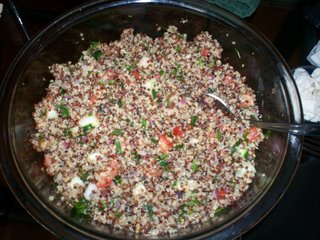
Looking through the pantry, I noticed I didn't have any bulghur wheat, but I did have a mixture of red and white quinoa, which is whole grain(bulghur is a cracked grain), but it has a relatively short cooking time and doesn't require soaking or toasting for proper digestion like most larger whole grains. I started boiling water while I washed the quinoa. While that was boiling, I washed the greens I had just bought, plus some arugala that I already had on hand.
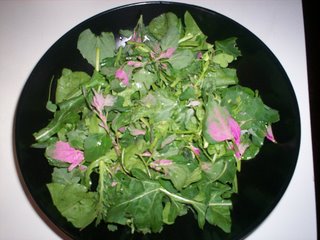
The purple parts were slightly iridescent, like the wings of a butterfly. I told you it was beautiful. I set the greens aside to dry, since dressings and sauces stick to greens better if the greens are dry--if greens are wet, the surfaces are already slick, and the dressing will slide right off.

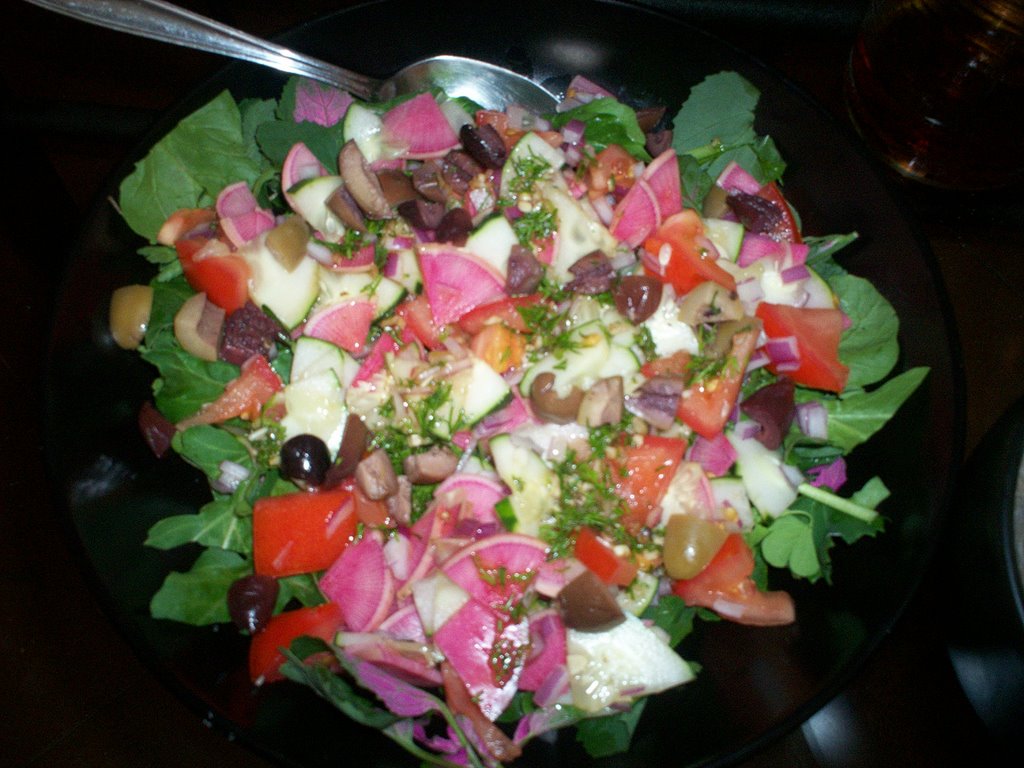
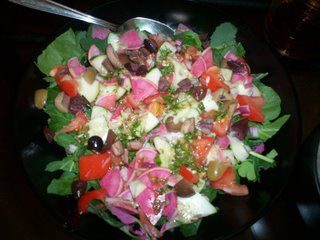
I started chopping veggies, herbs and seasonings like mad. Red onion, cucumber, tomato, assorted Greek olives, dill, parsley, mint, lemon, watermelon radishes, and garlic. Half of the tomatoes, onion, cucumbers, dill, and garlic ended going into the salad, along with the radishes and olives. First I marinated them with a bit of olive oil, sea salt and balsamic vinegar.
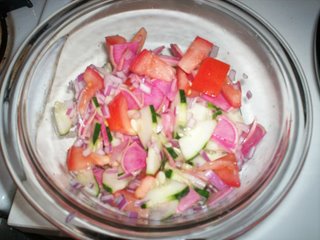
By that time, the quinoa was done, so I fluffed it up, and poured it into a serving bowl to cool for a bit while I made the hummus, so that the heat of the quinoa wouldn't cook the raw ingredients. I also put the frozen pitas into a 200 degree pre-heated oven for a few minutes at this point.

To make the hummus, I simply added about 1 1/2 cups cooked and drained chickpeas, 1 tablespoon raw tahini, 2 tablespoons lemon juice, two small cloves of minced garlic and a few springs of chopped parsley to a food processor with a tablespoon or two of olive oil and a bit of sea salt.

I mixed placed the marinated vegetables over the bed of greens.
Then, while R and JD set the table, I mixed the remaining red onion, tomato and cucumber into the cooled quinoa along with some parsley, mint, capers, olive oil, lemon and garlic.

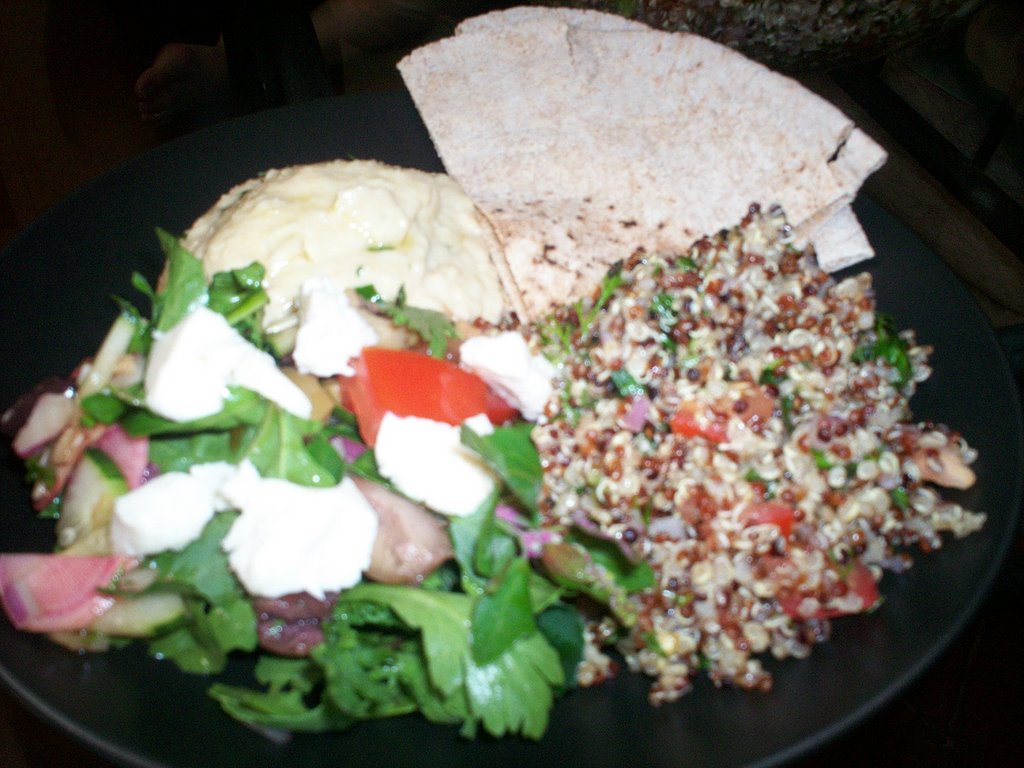
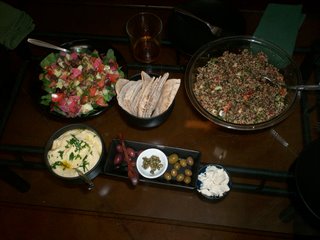
I put out some kalamata olives, green Greek olives, oil-cured black olives (my favorite), with some capers and a small bowl of leftover notcheese because I didn't have any of my homemade tofu feta, but the notcheese is so creamy and smooth it balances out the sharp bitter and pungent flavors of the salad . I cut the warm-from-the-oven pitas into quarters and we sat down to our feast.

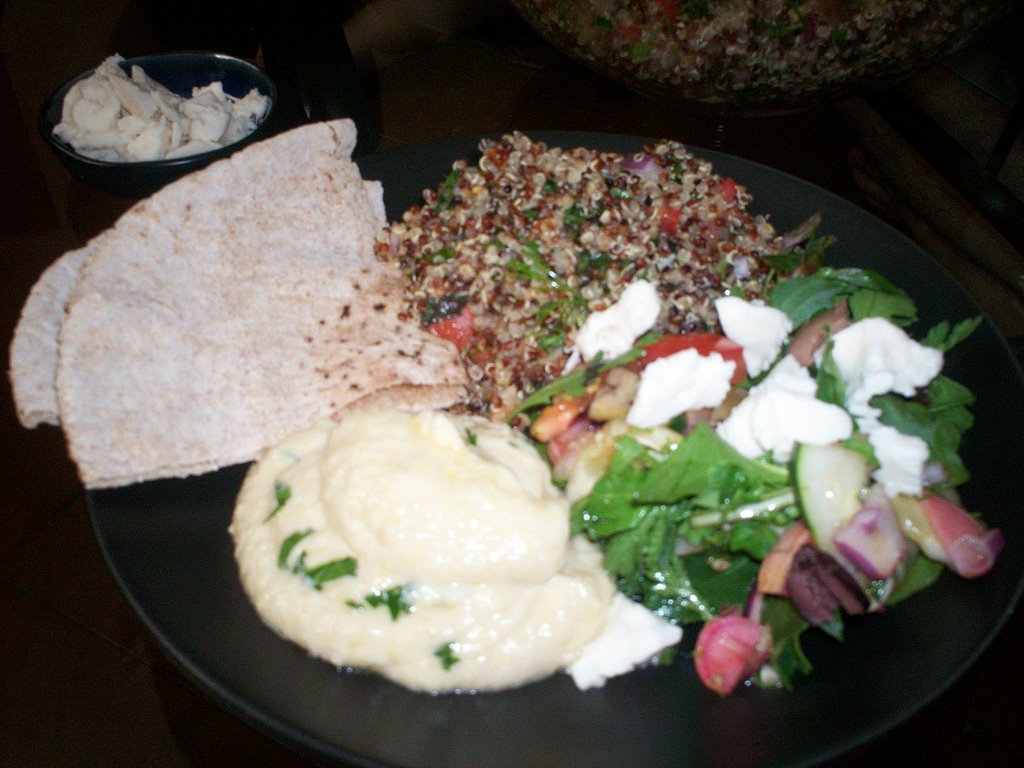
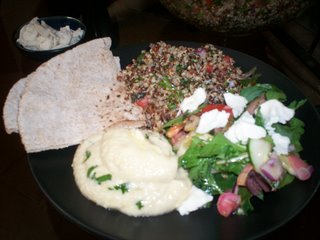
This is my plate up close:
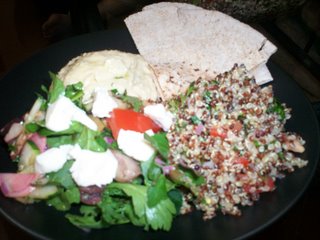

JD didn't eat any salad of course, but he stuffed himself full of pita, hummus and olives. I think that's kind of a perfect meal for him.

Create-Your-Own-Pizza and Chocolate Fondue

JD and I had been having pizza quite often. It's pretty easy if you use a few pre-made ingredients, it's super satisfying, and it can be really fun if everyone makes their own.

This particular time, R, my roommate was home, and so we invited her to eat with us. We had a make a "quick run" to Whole Foods for the crusts and my vegan notcheese. While we were there, I picked up some lacinto kale and we decided we wanted a decadent but simple fruit dessert. Thinking back to Valentine's Day, I suggested chocolate fondue, and JD heartily agreed.

We bought French Meadow's Yeast-Free Sourdough Crusts, Follow Your Heart's Montery Jack Flavored notcheese (they make a mozzarella version, but I like the mild, buttery flavor of the M. Jack although I don't know if it really tastes anything like jack, as I never tried it before going vegan) artichoke hearts, pine nuts, fresh basil, garlic, fresh shiitakes, unsweetened chocolate, hazelnut milk and an assortment of fresh fruit.

We already had some pizza sauce, black oil-cured olives, assorted greek olives, pepperoni, mozzarella, parmigiano reggiano and olive oil.

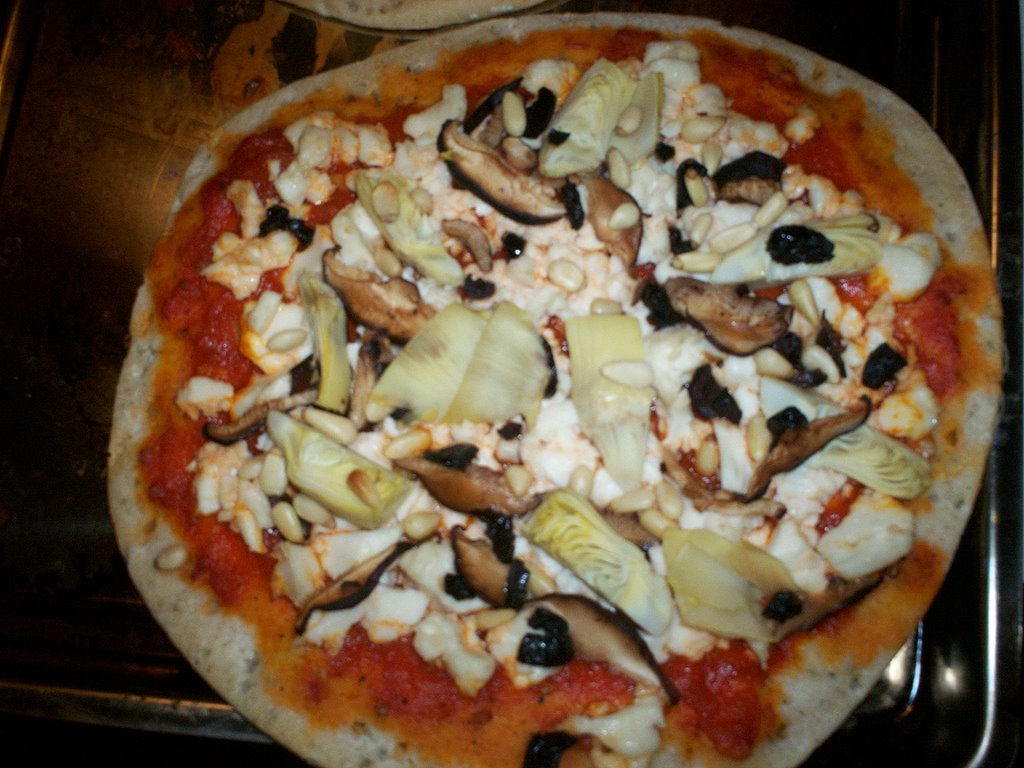
This was my pizza before baking:


This was my pizza before adding basil and baking. I took one crust, spread on tomato-based pizza sauce, plus some fresh minced garlic, crumbled the notcheese all over, then added artichoke heart quarters, shiitakes tossed with a little shoyu, pine nuts and oil-cured black olives.

JD and R made their own pizzas, and I swear I took pictures, but I think my camera's more vegan than I am, because they didn't save. They used the non-vegan items I mentioned, as well as the ingredients I used.

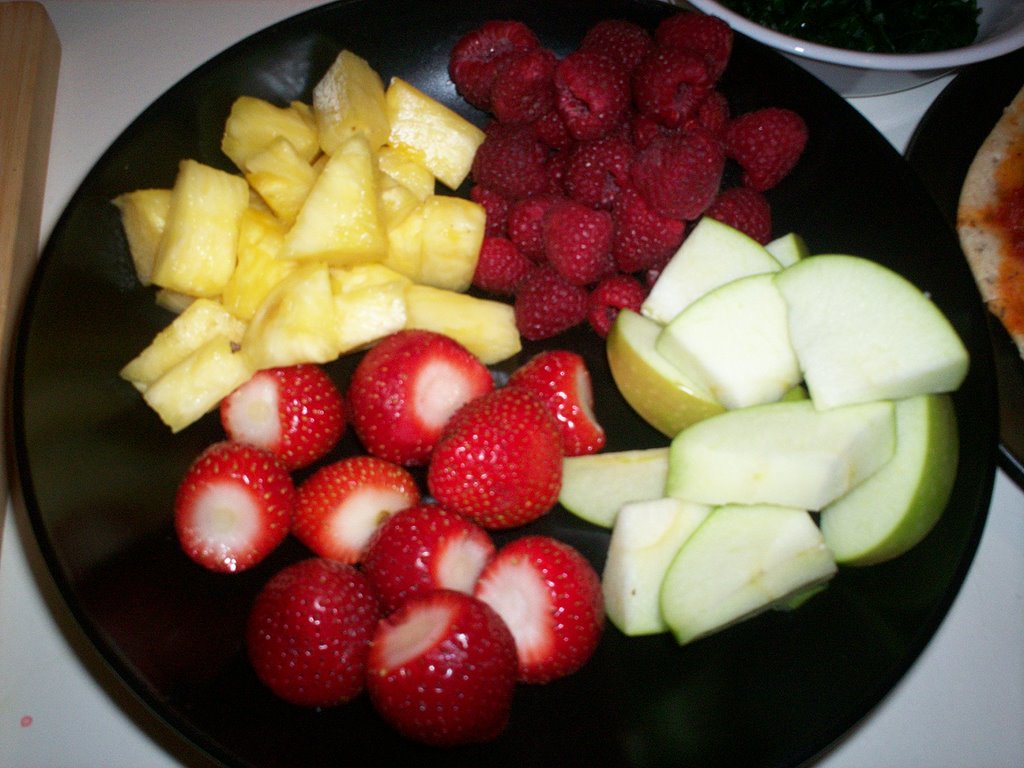
While the pizzas were baking, I blanched some kale for myself (they didn't want any), cut the fruit, and made the chocolate fondue. We had pineapple, raspberries, braeburn apples, and strawberries:

For the chocolate fondue, I melted the chocolate in a makeshift double boiler and added a touch of vanilla extract and agave nectar and hazelnut milk until it was sweet and creamy enough for our tastes. The hazelnut milk added a subtle but recognizable nutty flavor that JD loved, but it wasn't as creamy as soymilk, and the end result was a bit thinner than I would have liked. JD has discovered that he loves hazelnut milk, though, and I think he'd use it on cereal instead of cow's milk.

Here's a picture of my dinner from that evening:


R had a lovely bottle of wine which she and I shared. The create-your-own pizzas were a hit, of course, and the pineapple was the favorite dipper for the chocolate fondue.